
Last updated November 2, 2026
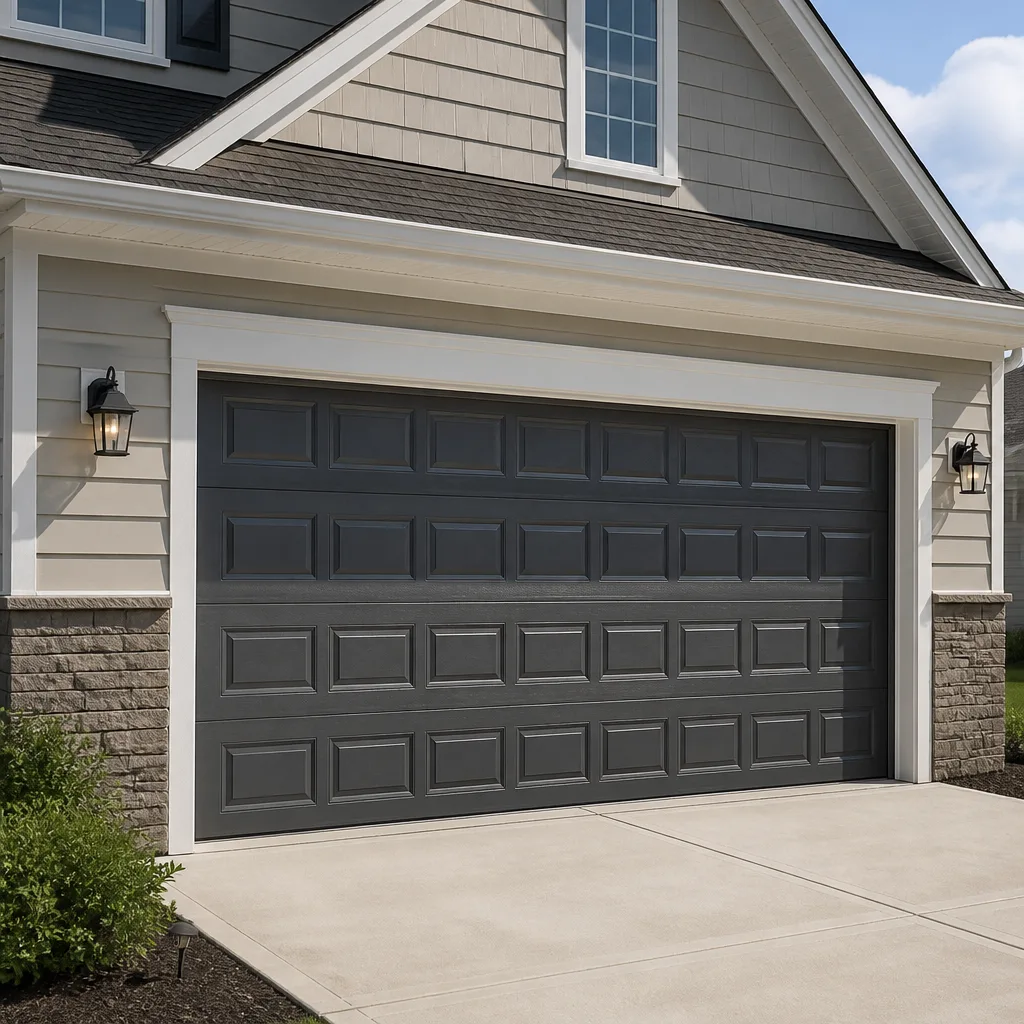 Raised-panel steel
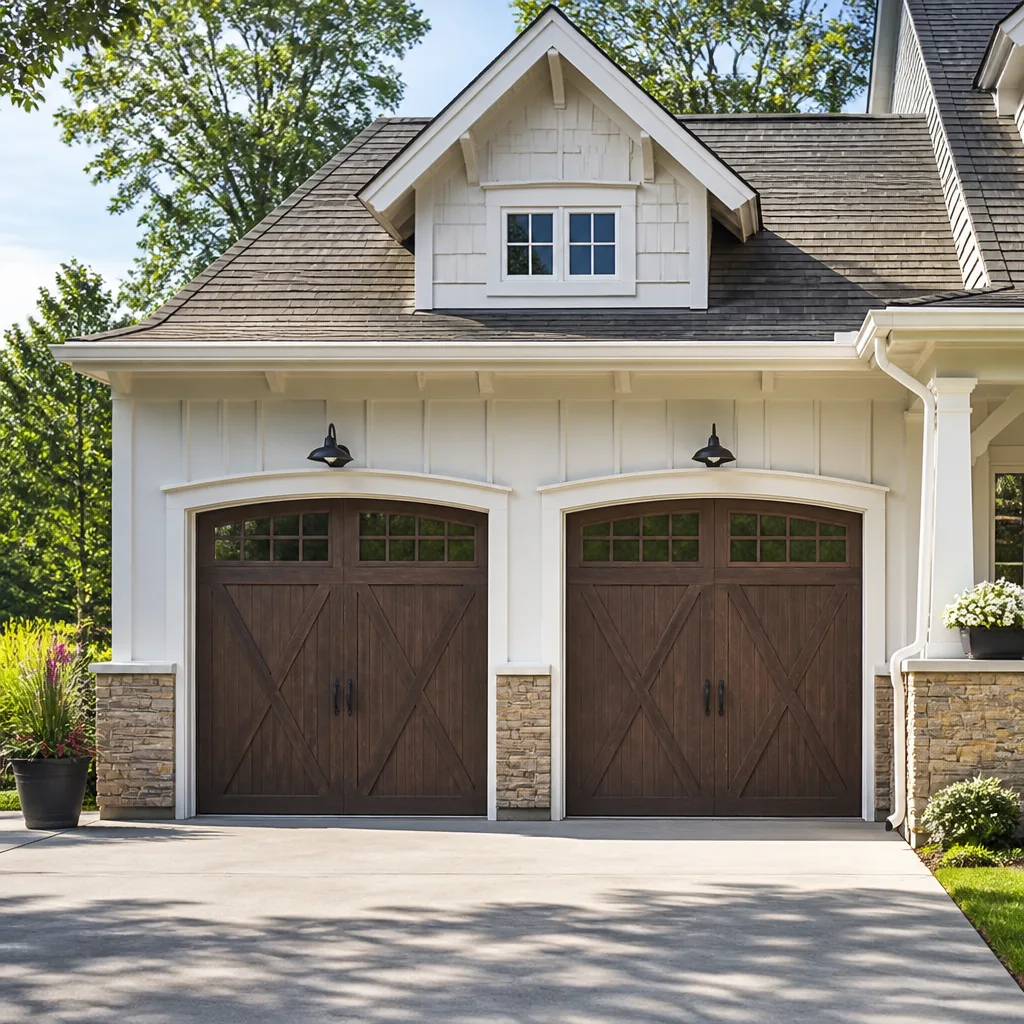 Carriage house
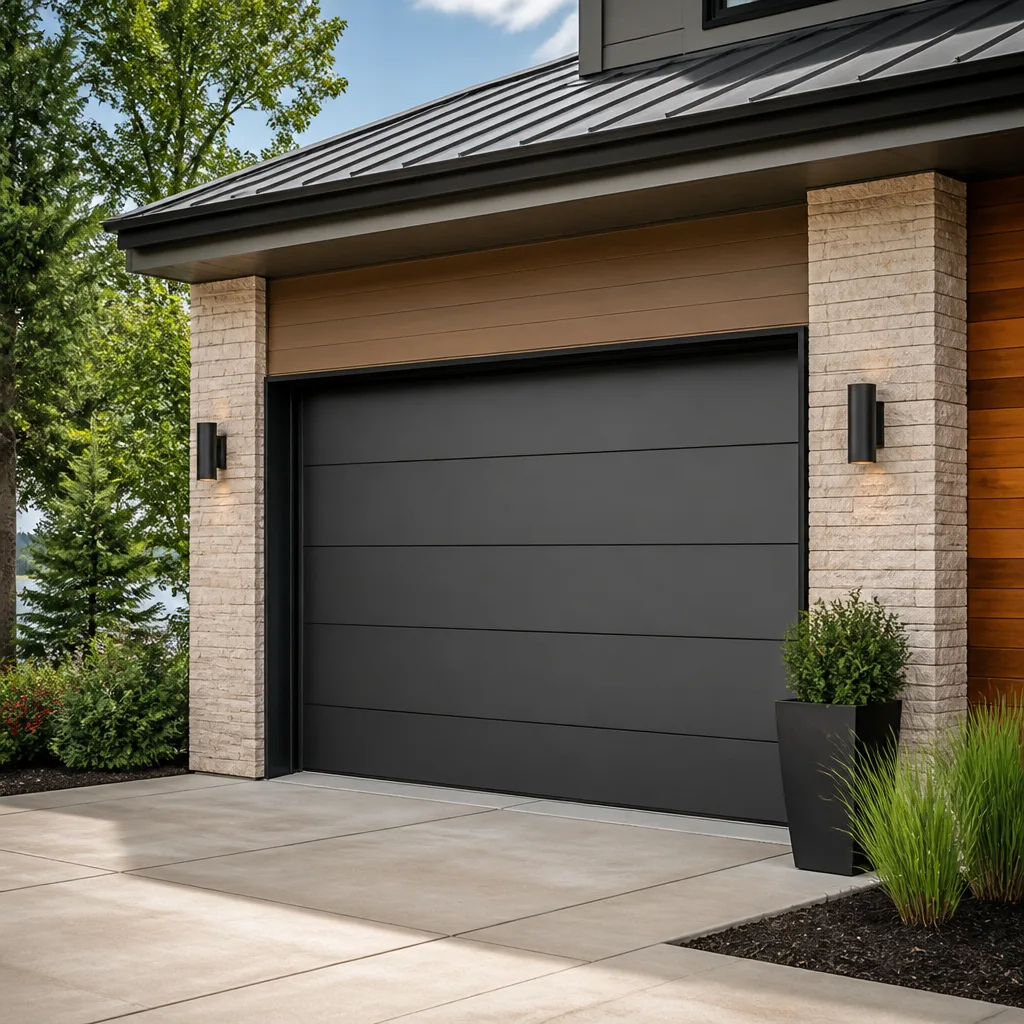 Modern flush
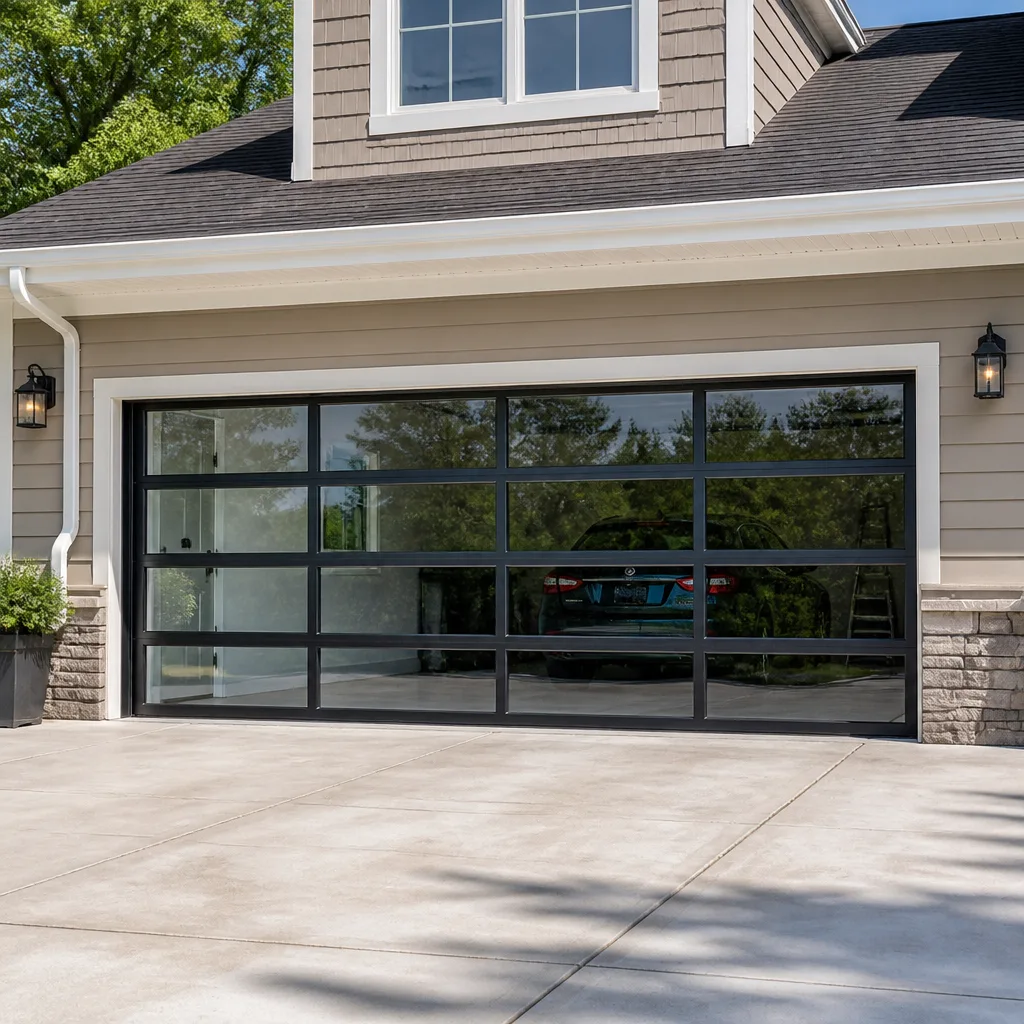 Full-view glass
 LiftMaster openers
 Chamberlain openers
Full 25-point door and opener safety check with every visit - springs, cables, rollers, tracks, and your LiftMaster or Chamberlain opener included
You get a price before we start. It does not change when the truck arrives.
Get your free estimateGarage Door Warning Signs: A Downey Homeowner’s Reference Guide
A garage door that “hesitates for a second” before opening isn’t a quirk. It’s a motor drawing excess amperage to compensate for a binding component, and it typically precedes a complete opener failure within 30 to 90 days. Most Downey homeowners don’t wake up to a suddenly dead door. They wake up to weeks of subtle signals they didn’t know how to read. This guide maps every common warning sign to its likely cause, tells you which ones are urgent, which ones can wait, and which ones mean you should stop using the door today. For more guides & resources, see our blog. By the end, you’ll know exactly what your door is trying to tell you, and what a realistic repair looks like in Downey’s market.
Quick Answer
The most common garage door warning signs in Downey are grinding or popping noises during operation, a door that hesitates or moves unevenly, visible rust or gaps on torsion springs, frayed cables, and an opener that runs but won’t lift the door. If your door is noisy but still moves smoothly, you typically have days or weeks to schedule a repair. If the door jerks, reverses mid-cycle, or a cable is visibly frayed, stop using the door and call a specialist. Most warning signs cost $150 to $400 to fix when caught early; ignoring them turns into $600 to $1,200 emergency failures.
Styles & brands we work with
- Raised-panel steel
- Carriage house
- Modern flush
- Full-view glass
- LiftMaster openers
- Chamberlain openers
Table of Contents
- What Your Garage Door’s Noises Actually Mean
- Visual Warning Signs You Can Check Safely
- Opener Behavior Patterns That Reveal Hidden Problems
- Three Movement Tests: Grading Your Door 1 to 5
- Watch and Wait vs. Call Today vs. Stop Using the Door
- How Downey’s Climate and Homes Affect Garage Door Wear
- What Warning-Sign Repairs Cost in Downey
What Your Garage Door’s Noises Actually Mean
Noise is the most reliable early warning system your garage door has. Each sound corresponds to a specific component under stress, and learning the difference is the fastest way to move from “something sounds off” to “I know what’s wrong.” In our experience working on doors across Downey, from North Downey’s mid-century homes to the newer builds near Stonewood Center, noise complaints are the single most common first call we get.
The Four Noises That Matter
Grinding means metal-on-metal contact with no lubrication left to absorb friction. The usual culprits are dry rollers running on a dry track, or a worn bearing inside the opener’s drive system. If the grinding comes from the opener unit itself, the internal gear is likely stripped, a repair that runs $180 to $300 on most LiftMaster and Genie models. If it’s coming from the door, lubrication and roller replacement usually solve it for under $150.
Popping is almost always a torsion spring issue. Springs under tension develop micro-fractures that release with an audible pop as the door moves. If you hear popping from the spring area above the door, that spring is nearing the end of its service life. A single popped spring won’t fail immediately, but it’s signaling. Popping from the track means a wheel is hitting a dent or obstruction, which is a much cheaper fix.
Scraping tells you the door is out of alignment. A door that scrapes against the track on one side is either off-balance, which we’ll get to in the movement tests below, or the track itself has shifted from its mounting. In Downey’s older homes, where foundations settle over decades, track shift is common. Ignoring scraping wears down rollers, bends tracks, and eventually forces the opener motor to work against resistance it wasn’t designed for.
Squealing is a bearing or roller crying for lubrication. The rollers on most doors have sealed or semi-sealed bearings. When the seal fails, the bearing dries out and squeals. A $3 roller left too long becomes a $250 track replacement when the worn wheel finally gouges the rail. Squealing from the spring coils means they’re rubbing against themselves, typically because the spring is fatigued and losing its coil spacing.
What the Noise Is Not
A door that opens quietly but closes loudly usually has a broken or bent hinge somewhere in the middle of the door. A door that’s loud only on the first operation of the day has cold-heavy springs in winter; Downey doesn’t get freezing temperatures, so if this happens here, the spring is already weak. A door that makes a single loud bang and then works normally has likely had a spring adjustment slip, a rare but serious condition that calls for immediate attention. That bang is stored energy releasing all at once.
Visual Warning Signs You Can Check Safely
Some of the most important warning signs are visible without ever touching the door or its hardware. Torsion springs and cables carry lethal tension. You never need to handle them to inspect them, and you shouldn’t. Here’s what to look for from a safe distance, standing on the garage floor.
Spring Visuals
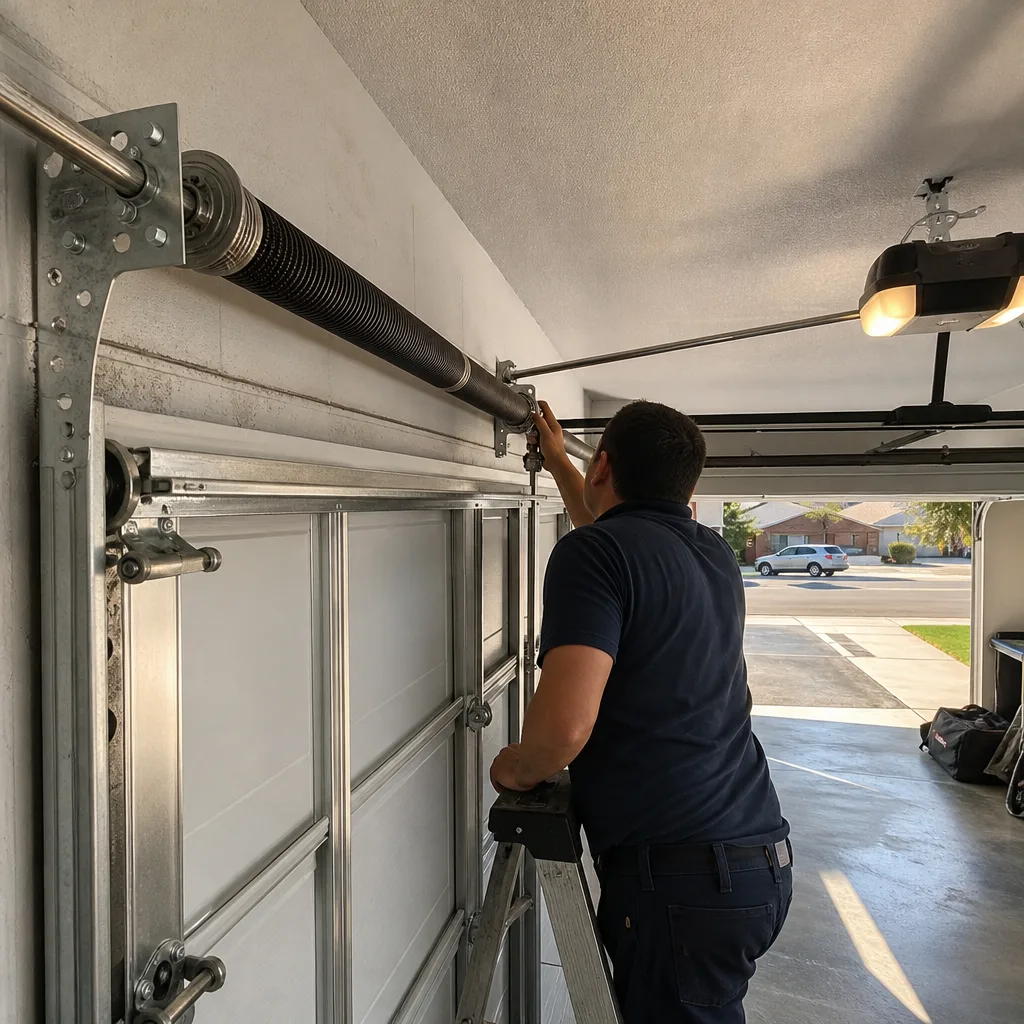
- Gaps between coils: A healthy torsion spring has coils that sit tight against each other. If you can see daylight through gaps between coils, or the spring has visibly stretched by an inch or more, it’s lost tension and is actively wearing out.
- Rust and pitting: Surface rust on a spring is common. Pitting, where the rust has eaten into the metal, is a structural problem. Pitted springs snap without warning. In our experience across Downey, springs on south-facing garages that hold heat and moisture from the LA basin’s marine layer rust faster than north-facing installations.
- Uneven spring gap: On a two-spring door, both springs should look identical. If one has widened coil gaps and the other doesn’t, the one with gaps has lost tension and the other is now carrying more than its share of load, which shortens the healthy spring’s life too.
Cable Visuals
- Fraying: Steel cable strands that are separating near the bottom bracket or where the cable wraps around the drum are days to weeks from snapping. A snapped cable is a violent event and makes the door unusable.
- Rust at the drum: The cable wraps around a cone-shaped drum at the top. Rust there means moisture has been sitting on the cable, which accelerates strand fatigue.
- Slack cable: If one cable has visible slack while the other is taut, the door is not lifting evenly. This is a balance failure that’s also putting uneven load on both the opener and the second cable.
Track and Panel Visuals
- Bent track flanges: The track has a lip that guides the rollers. If that lip is bent outward or inward at any point, you’ll see corresponding wear marks on the roller wheels.
- Worn roller wheels: Nylon rollers wear flat on one side, producing a “flat tire” look. Steel rollers wear thin and develop play. Either condition causes wobble and accelerating wear on the track.
- Panel sag or separation: Look at the door from the outside when it’s closed. If the top panel pulls away slightly from the one below it at the corners, the door’s structural integrity is compromised. This is less common in Downey than in humid climates, but it happens on older doors where the stiles and hinges have outlived the panel material.
Opener Behavior Patterns That Reveal Hidden Problems
The opener is the most neglected failure point in the system. Most Downey homeowners think of the door as the thing that opens. But the motor, capacitor, logic board, and drive gear are consumable parts with finite lifespans, and they telegraph their condition in specific, repetitive ways. If your opener is a Genie or Chamberlain model made within the last decade, these patterns apply directly to your unit.
Pattern One: Motor Runs, Door Doesn’t Move
If the opener motor spins but the door stays put, the drive gear is stripped. This is the most common opener failure we see, and it’s almost always repairable for less than the cost of a new opener. On chain and belt drives, the gear connects the motor to the chain or belt. It’s made of nylon, designed to wear out before the motor does, and it strips quietly. This is a $150 to $250 repair. A new opener runs $400 to $700 installed. The repair is almost always the better choice unless the opener is 15 years old or more.
Pattern Two: Door Opens, Then Immediately Reverses
A door that goes up a few feet and then reverses is usually not “confused.” The opener’s force sensor is detecting resistance above its safety threshold. That means something is making the door harder to lift than it should be. The most common causes are a weak spring that’s no longer offsetting the door’s weight, or a track obstruction. Try this: release the door from the opener using the red emergency cord and lift it manually. If it feels heavy, that’s a spring problem, not an opener problem. Replacing a snapped or weak spring in Downey typically runs $180 to $340 depending on your door’s weight class.
Pattern Three: Door Hesitates Before Moving
The hesitation you feel as a half-second delay between pressing the button and hearing the motor engage is the motor struggling to overcome initial resistance. The capacitor, which provides the starting surge, may be failing. Or the door’s weight is no longer properly counterbalanced, so the motor is doing all the lifting from a dead stop. This is the symptom that degrades into “the opener just hums” within a few months. A capacitor replacement is a $100 to $180 job. Letting it fail entirely often takes the motor with it, because the motor pulls maximum amperage during a failed start attempt.
Pattern Four: Opener Works Intermittently
An opener that works sometimes and doesn’t other times has either a logic board problem or an electrical connection problem. In Downey’s older neighborhoods, we’ve seen homes with original 1960s wiring that delivers inconsistent voltage to modern openers. A logic board issue is typically temperature-sensitive, working when the garage is cool and failing when it’s hot. If your opener is more predictable in the morning than the afternoon, suspect the board. Board replacement is $180 to $300 on most Genie and Chamberlain models; at that price, the decision to repair or replace depends on the unit’s age and overall condition.
Three Movement Tests: Grading Your Door 1 to 5
Every Downey homeowner can safely test their garage door’s health in about five minutes. These tests require no tools and no contact with high-tension components. Grade each result from 1 (bad) to 5 (excellent) and add them up. A score of 12 or lower means schedule a service call. A score of 9 or lower means the door is likely unsafe and should be used only in an emergency until it’s fixed.
Test One: The Balance Test
- Close the garage door completely.
- Pull the red emergency release cord to disconnect the door from the opener.
- Lift the door manually about waist high, using the handle or a safe grip on the bottom section.
- Release it gently.
A properly balanced door stays where you left it. If it drops, the springs have lost tension and the opener is being forced to work against more weight than it’s designed for. If it rises, the springs are over-tensioned, which makes the opener run “hot” and shortens its lifespan. Either way, the door’s counterbalance system is compromised. This is the single most important test you can run, because it predicts spring failure, opener burnout, and cable strain all at once.
Test Two: The Speed Consistency Test
- Reconnect the door to the opener by pressing the opener button until the carriage re-engages.
- Open the door from fully closed to fully open, watching the rate of travel.
- Close the door, watching the rate again.
The door should move at a consistent speed through the entire cycle. If it speeds up or slows down at specific points, something is binding. Speed changes usually mean a track issue, a worn hinge, or a fatigued spring that provides uneven counterforce through the travel arc. The opener motor compensates for this by varying its output, which is exactly how motors burn out early. A door that was silent and smooth six months ago and now has a mid-travel “catch” is telling you that a component is degrading.
Test Three: The Gap and Alignment Test
- Close the door fully and step back ten feet.
- Look at the gap between the bottom of the door and the garage floor.
- Note whether the gap is even from left to right.
- Check the gaps on the left and right sides of the door where the panels meet the frame.
An even gap means the door is plumb and the framing is square. An uneven gap means the door itself has shifted, the track has moved, or the foundation has settled. In Downey, where many homes were built in the 1950s and 1960s on varying soil types, foundation settling is a real contributor to garage door misalignment. The door can be adjusted to compensate, but the underlying foundation issue will continue to create drift over time. We account for this in every alignment we do on older Downey homes, setting the door slightly “off” so it settles into true rather than out of it.
Watch and Wait vs. Call Today vs. Stop Using the Door
Not every warning sign requires an immediate call. Some do. The difference matters because a door that’s actually dangerous and still gets used can cause serious injury or property damage with no further warning. Here’s how to triage what you observe.
Watch and Wait (Schedule Within 2-4 Weeks)
- A mild squeak or squeal that’s been present for a few weeks but hasn’t gotten worse
- Door moves slightly slower than it used to but still opens and closes fully without hesitation
- Cosmetic rust on spring surfaces with no coil gap visible
- One to two inches of visible wear marks on the track from roller contact
- Opener remote works intermittently from outside the garage but always from inside
These are signs of normal aging. They’re not false alarms, but they don’t require emergency service. Schedule a maintenance visit before they become the more serious entries on this list. In our experience with Downey homeowners, the “watch and wait” stage lasts two weeks to three months before progression. Catching problems here is always under $200.
Call Today (Schedule Within 24-48 Hours)
- Door opens then reverses back down on its own
- Jerking or catching at one specific point in the travel
- Popping sounds from the spring area
- Visible coil gaps on a torsion spring
- Opener hums but doesn’t move the door
- Door is noticeably heavier to lift manually than it was a month ago
These are active failures in progress. The door still works, but a component has already failed or is in the final stages of failing. Each additional cycle makes the problem worse. A door that’s getting heavier to lift is actively burning out the opener motor every time you use it. A door that pops is cycling a spring that’s already fractured. Every one of these conditions is repairable for $150 to $400 today. The same conditions become $600 to $1,200 failures if they’re ignored for another month.
Stop Using the Door (Do Not Operate Until Serviced)
- A snapped cable with the door stuck partially open or closed
- A visibly broken spring, either fully snapped or with a large gap in the coils
- The door comes off the track and hangs at an angle
- Any loud bang followed by the door falling several inches or slamming
- The door opens partially then stops and will not move in either direction
These conditions mean the door’s counterbalance system is compromised and the door’s weight, often 150 to 300 pounds, is no longer controlled. A door that falls uncontrolled can kill someone in its path. The high-tension spring system that failed can also cause serious injury during a second failure event. Close the garage door to foot traffic, disconnect the opener if it’s trying to cycle, and call a professional. Garage Door Repair in Downey covers spring and cable failures as priority calls, and the price is quoted and agreed before any work starts.
How Downey’s Climate and Homes Affect Garage Door Wear
Downey sits in a specific microclimate that shapes how garage doors age. The city’s location in the LA basin, about 12 miles from the coast, means marine layer moisture rolls in on many mornings, especially in late spring and early summer. That moisture doesn’t soak the way rain does, but it creates a persistent humidity that accelerates rust on uncoated steel components. Torsion springs on south-facing Downey garages, where morning sun follows overnight moisture, develop pitting faster than identical springs on north-facing installations. The difference is measurable: we regularly replace springs on south-facing Downey doors at 7 to 9 years of service, while north-facing springs often make 10 to 12. For a full maintenance schedule, see our Seasonal Garage Door Care for Downey: Year-Round Homeowner’s Guide.
Downey’s housing stock presents its own set of patterns. The city’s building boom hit in the 1950s and 1960s, and a significant percentage of homes have their original garage framing or additions that were built before modern door weight standards. We see doors that are heavier than their opener ratings, tracks that were installed at angles modern manufacturers wouldn’t allow, and spring systems that were designed for the door’s original weight but never re-tensioned after the homeowner added insulation or a heavier panel. Homes in the Northeast Downey hills face additional stress because the elevation change means doors face more wind loading during Santa Ana events, and wind pushes against the door panels, putting lateral stress on hinges and tracks that flatland doors never experience.
What this means for homeowners: a warning sign that’s mild in another climate is worth more attention in Downey. The marine layer shortens rust timelines. The older housing stock means more doors are operating outside their original design parameters. And the single-family garage, which is the default in Downey, gets more cycles per household than shared or condo garages, which means wear accumulates faster than national averages would suggest.
What Warning-Sign Repairs Cost in Downey
One of the biggest reasons homeowners ignore warning signs is uncertainty about cost. They know the door sounds wrong, but they don’t know if the fix is $80 or $800, so they wait. Here’s what each warning-sign repair actually costs in Downey’s market, based on what we see day to day. These are the prices you should expect to pay a specialist, not a handyman discount or a national chain’s inflated quote.
| Symptom | Typical Repair | Downey Price Range |
|---|---|---|
| Squealing rollers or dry track | Lubrication, roller replacement if worn | $80 – $180 |
| Grinding from opener unit | Drive gear replacement | $150 – $250 |
| Popping or gap-visible torsion spring | Spring replacement (one or both) | $180 – $340 |
| Frayed cable | Cable replacement, spring re-tension | $150 – $280 |
| Door reversing on its own | Spring replacement or force-limit adjustment | $150 – $350 |
| Opener hums, door won’t move | Gear or capacitor replacement | $100 – $300 |
| Door off track | Track realignment, roller check | $180 – $400 |
| Full door replacement after ignored failure | New door, new springs, new hardware | $800 – $2,500 |
The math is straightforward. A $200 spring replacement caught early becomes an $800+ emergency when the spring snaps, damages the cables, and bends the track on its way down. A $150 gear replacement becomes a $500 opener replacement when the stripped gear takes the motor with it. The point of paying attention to warning signs isn’t just avoiding inconvenience. It’s avoiding the cost multiplier that comes with every week of delay. If you’re pricing a repair, Garage Door Installation in Downey covers full door replacement when repairs no longer make sense, and the estimate process is the same: written price, agreed before work starts.
Common Mistakes to Avoid
- Lubricating a door that’s already misaligned. Spraying lubricant on a door that scrapes or jerks masks the symptom without touching the cause. The door runs smoother for a week, then the underlying problem, which has gotten worse, reasserts itself louder than before. Fix alignment first, then lubricate.
- Running the door after hearing a snap. A single loud snap followed by continued operation typically means one of two springs has failed and the opener is now lifting the entire door unassisted. Every cycle after that point is actively damaging the opener and stressing the remaining spring. Stop using the door immediately.
- Replacing opener parts on a door that’s out of balance. A new gear, capacitor, or motor installed on a door with a weak spring will fail prematurely. The opener is not the cause of the problem if the door drops in the balance test. Fix the door, then fix the opener.
- Assuming a noisy door is an old door, not a fixable door. Noise is almost never a reason for door replacement. Grinding, squealing, and popping are component-level failures with component-level fixes. A $200 service call restoring a door to quiet operation beats a $1,500 replacement every time.
- Overlooking the opener’s age when deciding repair vs. replace. An opener that’s 15 years old and needs a $250 gear is not a $250 investment. It’s a $250 investment in a unit that will need another major repair within two years. At that age, replacement makes more financial sense, and current Genie and Chamberlain models are meaningfully quieter and more reliable than anything from 2010 or earlier.
- Letting an uneven gap go because “it’s been like that for years.” A door that’s settled out of level puts uneven wear on springs, cables, rollers, and track. The longer it runs uneven, the more components degrade in the process. Alignment is a cheap fix; the damage it causes when ignored is not.
See the difference
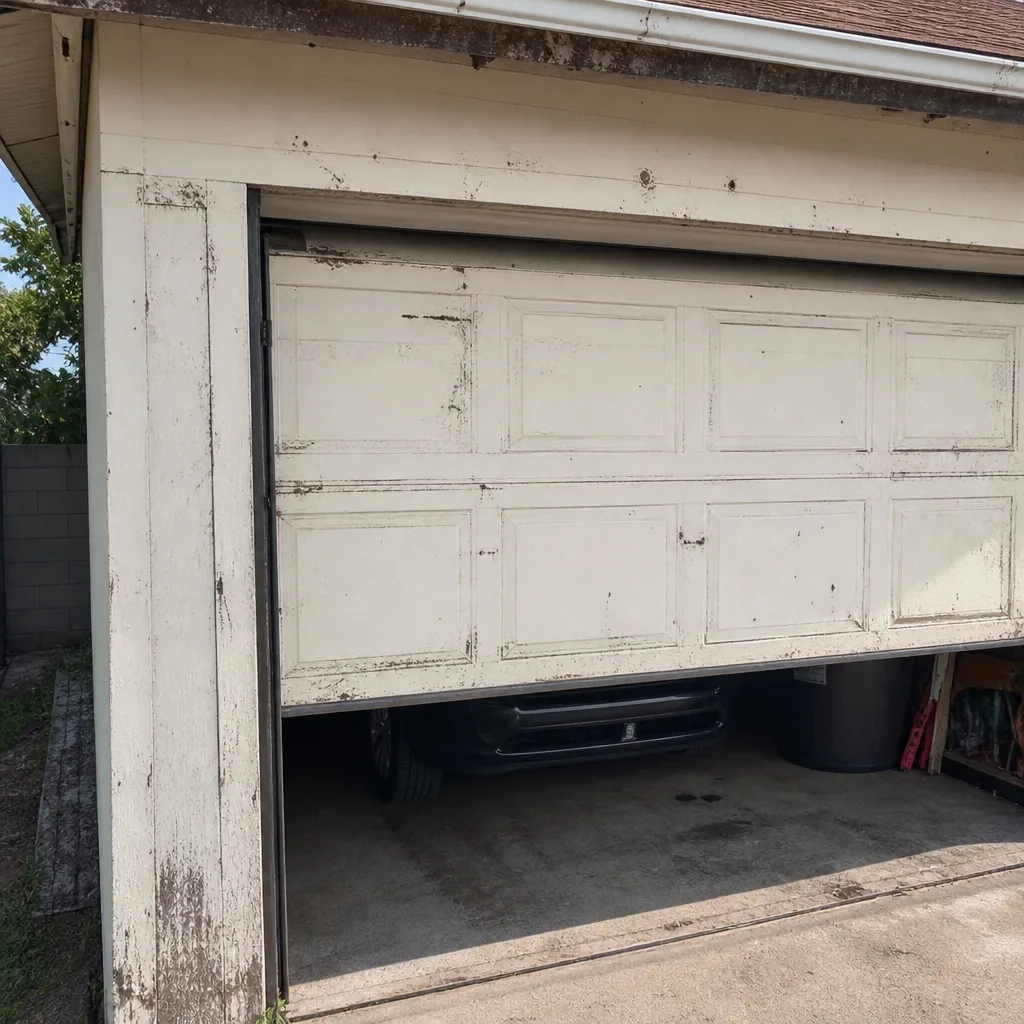 Before
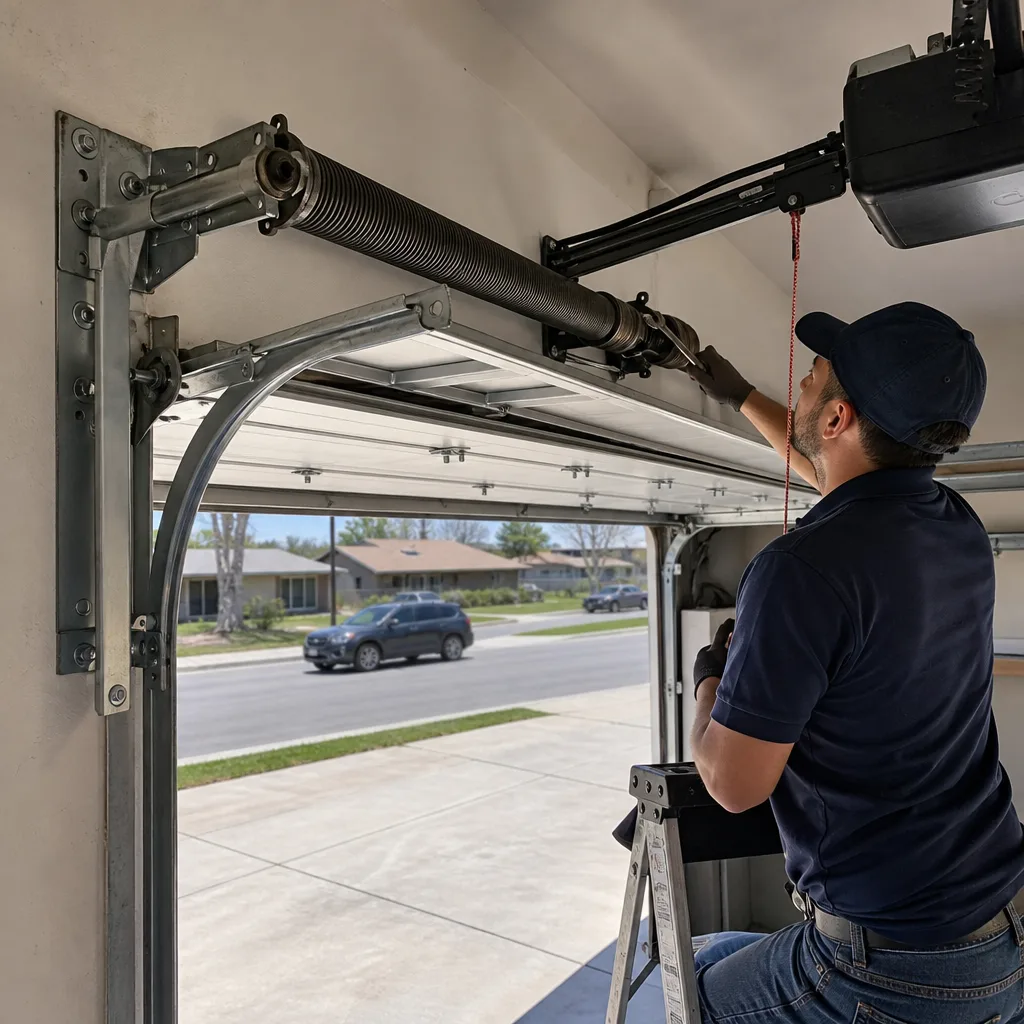 After
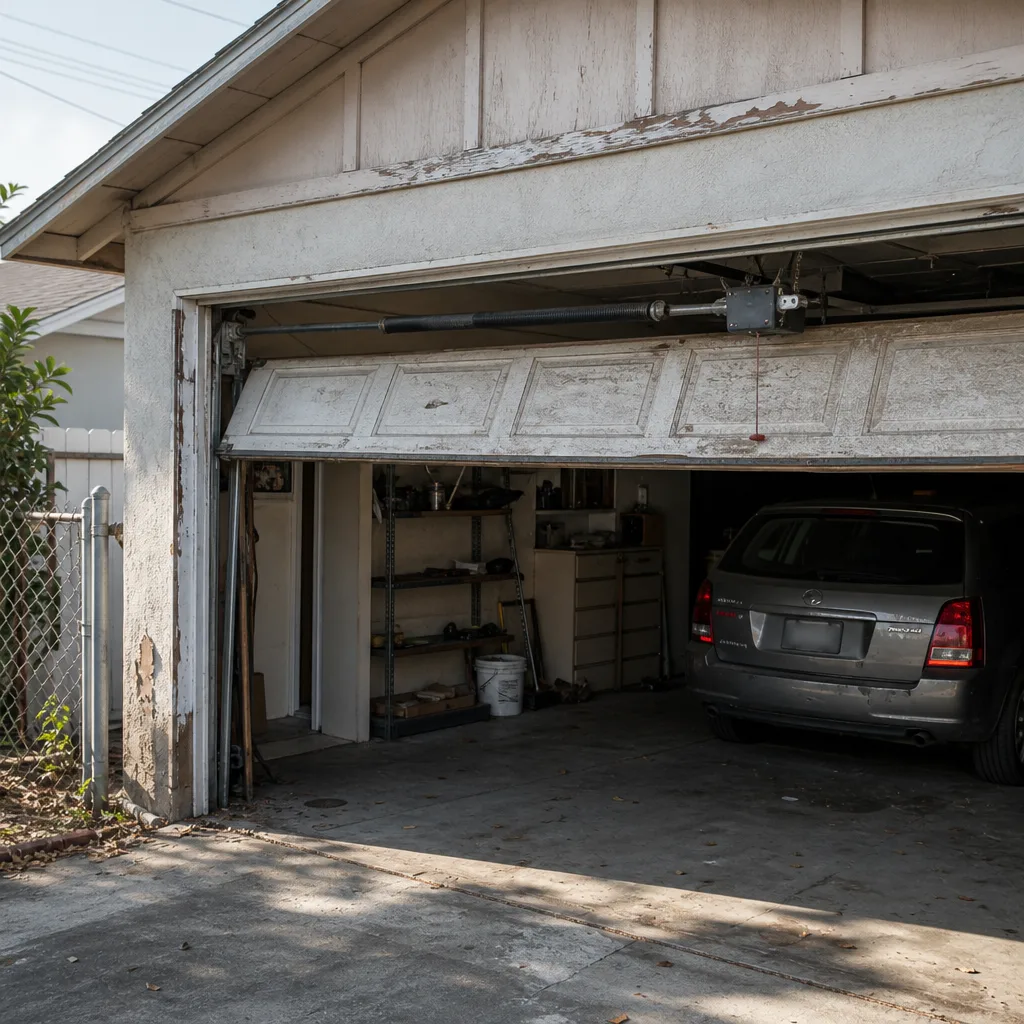 Before
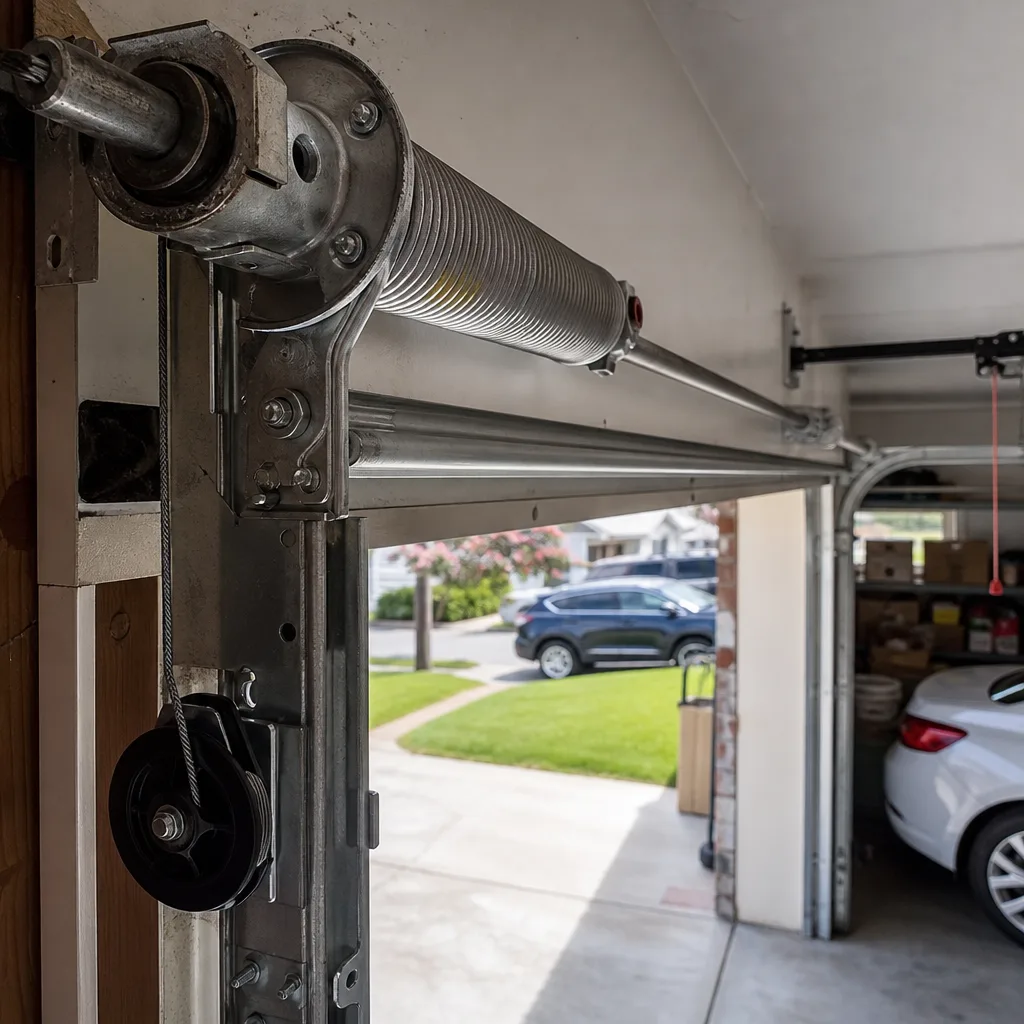 After
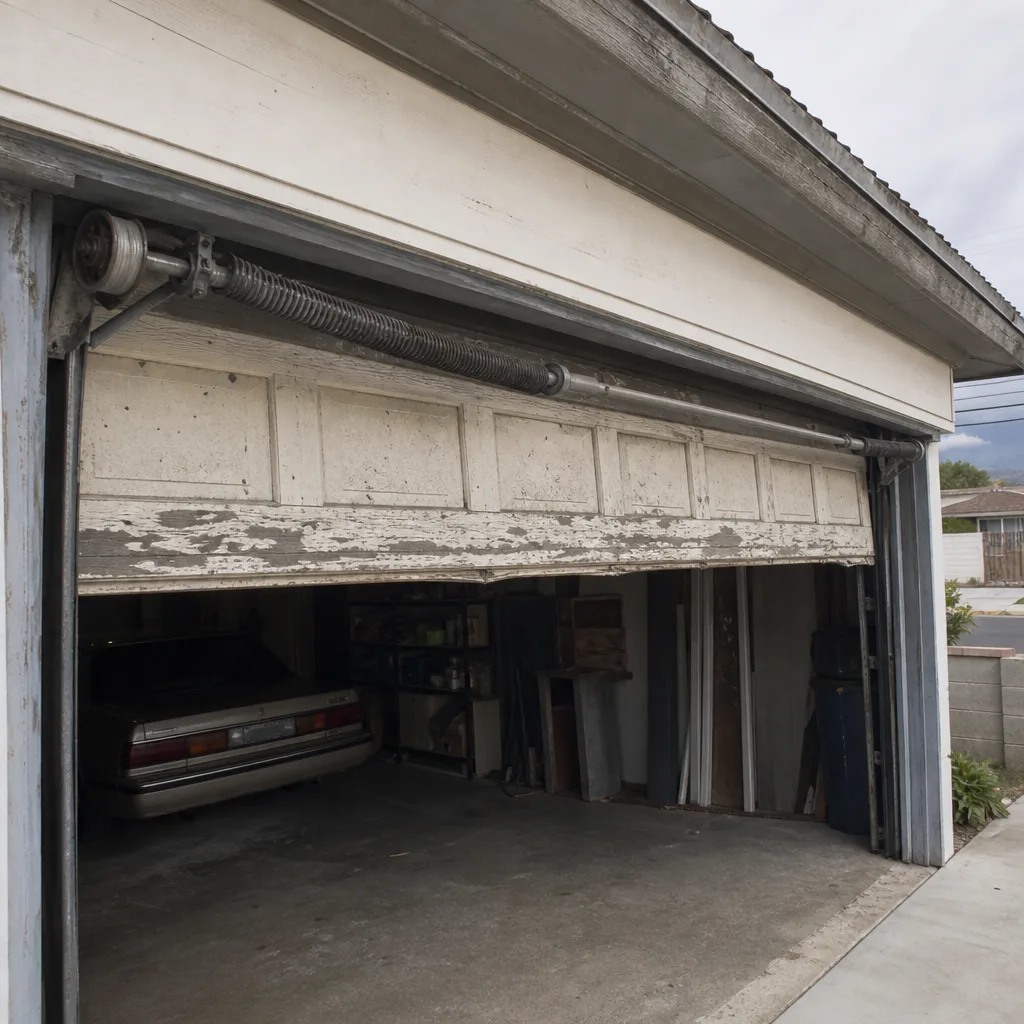 Before
 After
When to Call a Professional
Any of the “Call Today” or “Stop Using the Door” conditions above warrants a professional assessment. Beyond those, schedule a service visit if your door is more than eight years old and hasn’t been professionally inspected in over two years, if you’ve recently added insulation or changed the door’s weight, or if you’re in a home you bought within the last year and don’t know the service history of the door system. Garage Door Service Downey offers free estimates in Downey. We work exclusively on garage doors: repair, opener repair, and installation across eight major brands including Genie, Clopay, and Wayne Dalton. We’re already familiar with your system’s failure patterns before we arrive. Call (844) 734-1196. If your door is actively failing, Garage Door Opener Repair in Downey covers opener-specific diagnostics and repairs under the same roof.
Frequently Asked Questions
A torsion spring replacement in Downey typically costs $180 to $340, which includes the spring, labor, and re-tensioning. Two-spring doors may run higher when both springs are replaced together, which we recommend because both springs were installed at the same time and have aged at the same rate. Your exact price depends on your door’s weight class and spring size. Call (844) 734-1196 for a specific quote, the estimate is free and the price is locked before any work begins.
Yes, we prioritize same-day service in Downey for spring, cable, and opener failures that leave a door stuck shut or partially open. These are safety issues as much as they are convenience issues, and we keep our Downey schedule flexible to accommodate them. If your door is still operating but making noise, next-day service is typically available. Call (844) 734-1196 and we’ll tell you when we can be there.
No. The price we quote for a spring replacement, cable replacement, or opener repair is the price you pay unless we find an additional problem that wasn’t visible from your description. If we do find something unexpected, we stop work and show you exactly what we found and what the new total is before we continue. You approve everything upfront.
Yes. We stock springs, cables, rollers, gears, and capacitors for the eight major brands we service, including Genie, Clopay, Amarr, and Wayne Dalton. That means most repairs are completed on the first visit without waiting for a parts delivery. It’s one of the practical advantages of working with a garage door specialist rather than a general contractor: we carry the inventory. If you’re weighing brands, our Choosing the Right Garage Door Brand: A Buyer’s Guide for Downey breaks down the options.
If your opener is under ten years old and the repair is a gear, capacitor, sensor, or logic board, repair is almost always the better financial choice. Those repairs run $100 to $300, and the unit has meaningful life left. If your opener is over fifteen years old, replacement at $400 to $700 typically makes more sense than repairing an aging unit that will likely need additional repairs soon. We’ll give you an honest recommendation based on the specific model on your ceiling, not a blanket upsell.
In Downey’s marine-layer climate, an annual inspection is the right cadence for most homes. Given the moisture patterns and older housing stock, we catch most developing problems at the one-year mark, before springs lose dangerous tension or cables reach the fraying stage. Doors over ten years old benefit from twice-a-year checks. An inspection is cheap insurance against a $700 emergency.
The Bottom Line
Garage door failures in Downey are almost never sudden, even when they feel that way. The spring that snapped, the cable that frayed, the opener that died: each one showed signs for weeks or months first. A door that hesitates before opening is telling you the motor is overworked. A popping spring is telling you it’s fractured. A balance test that fails is telling you the counterbalance system is giving up. Every one of these signals has a fix that costs $150 to $400 when caught early and $600 to $1,200 when ignored. Learn the noises, run the tests, and know when to call. A specialist, not a generalist, is the difference between a $200 Tuesday repair and a $900 Sunday emergency. Garage Door Service Downey is a Garage Door Service Downey home specialist serving the city since 2016.
Written by the team at Garage Door Service Downey, serving Downey since 2016.