
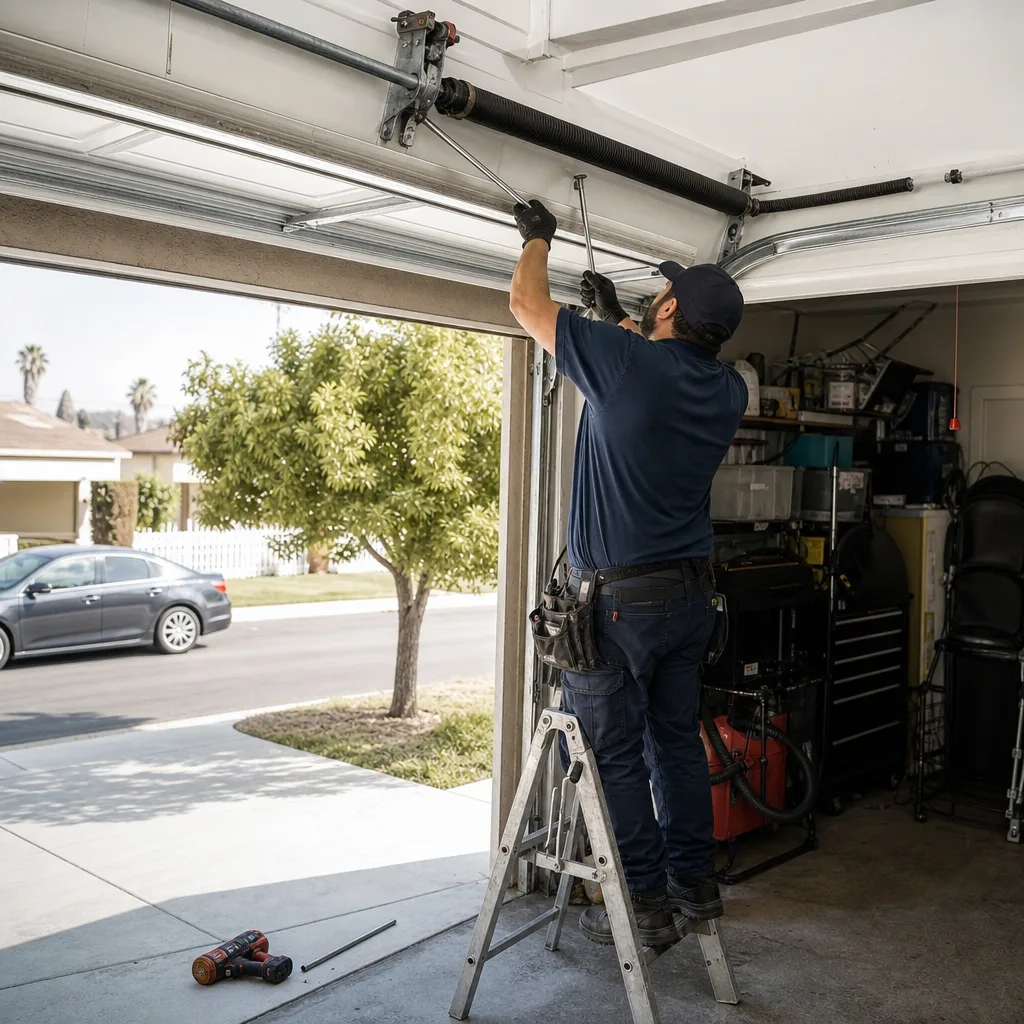
Last updated November 3, 2026
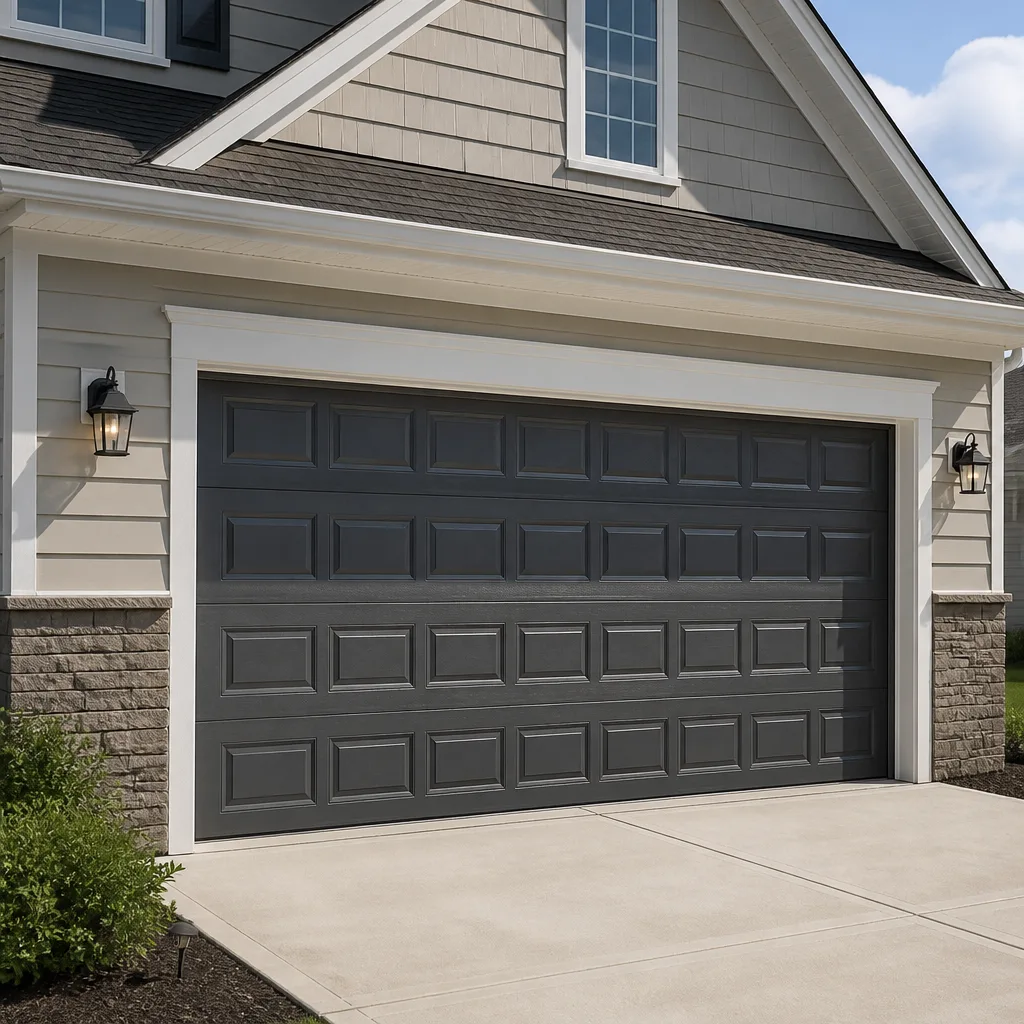 Raised-panel steel
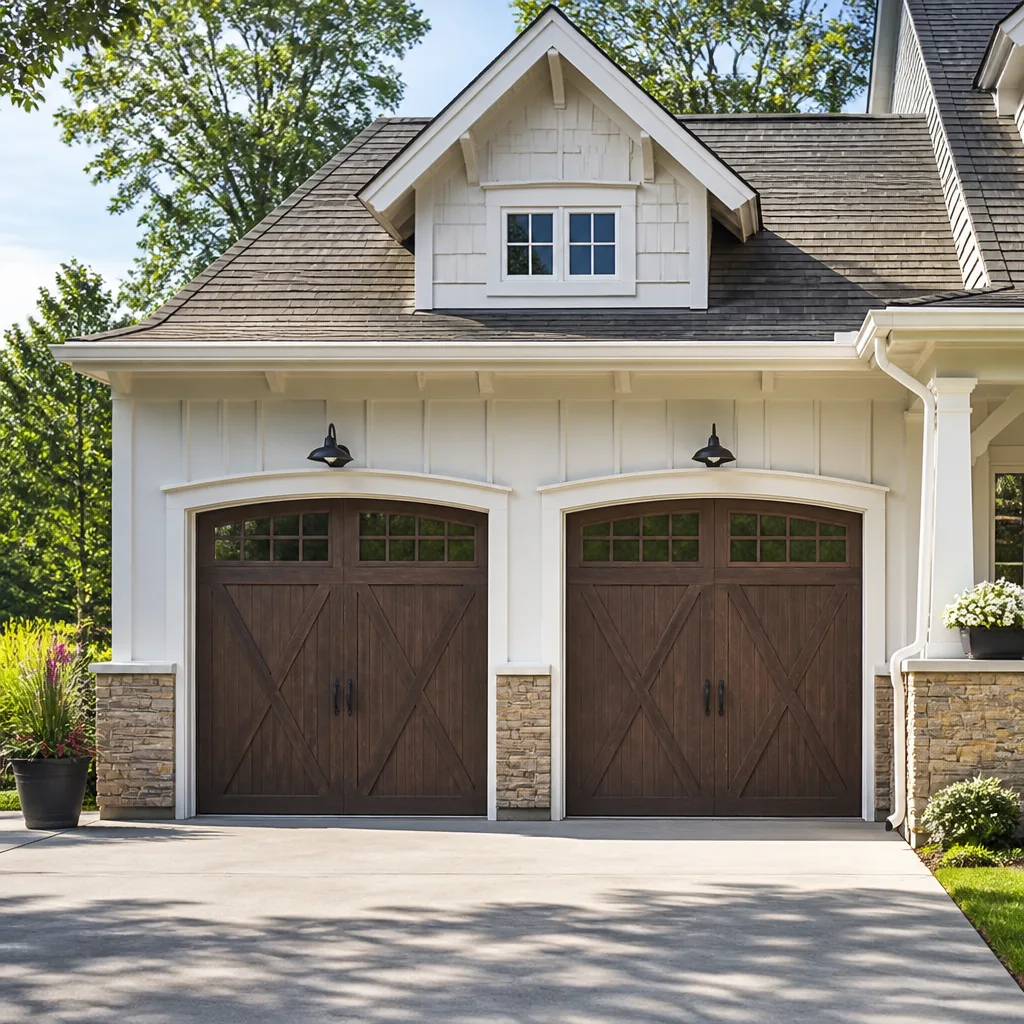 Carriage house
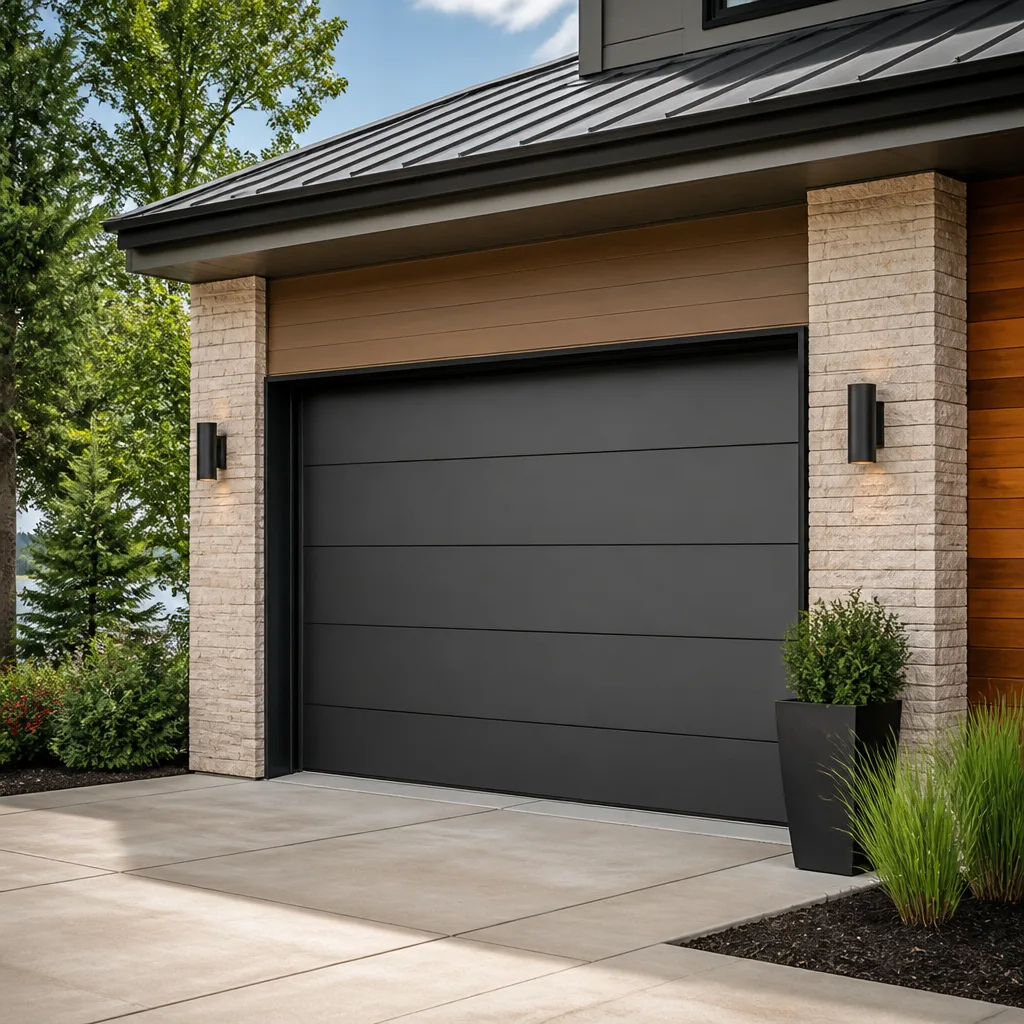 Modern flush
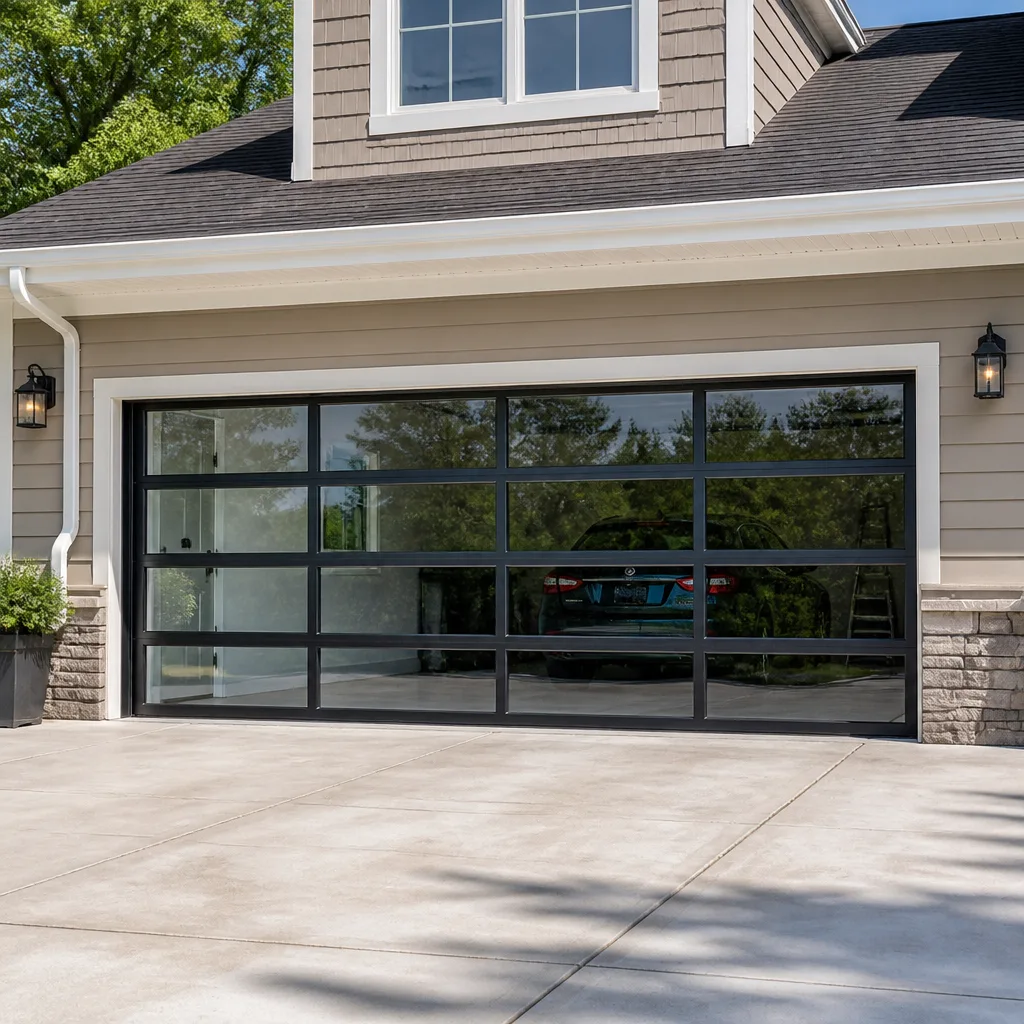 Full-view glass
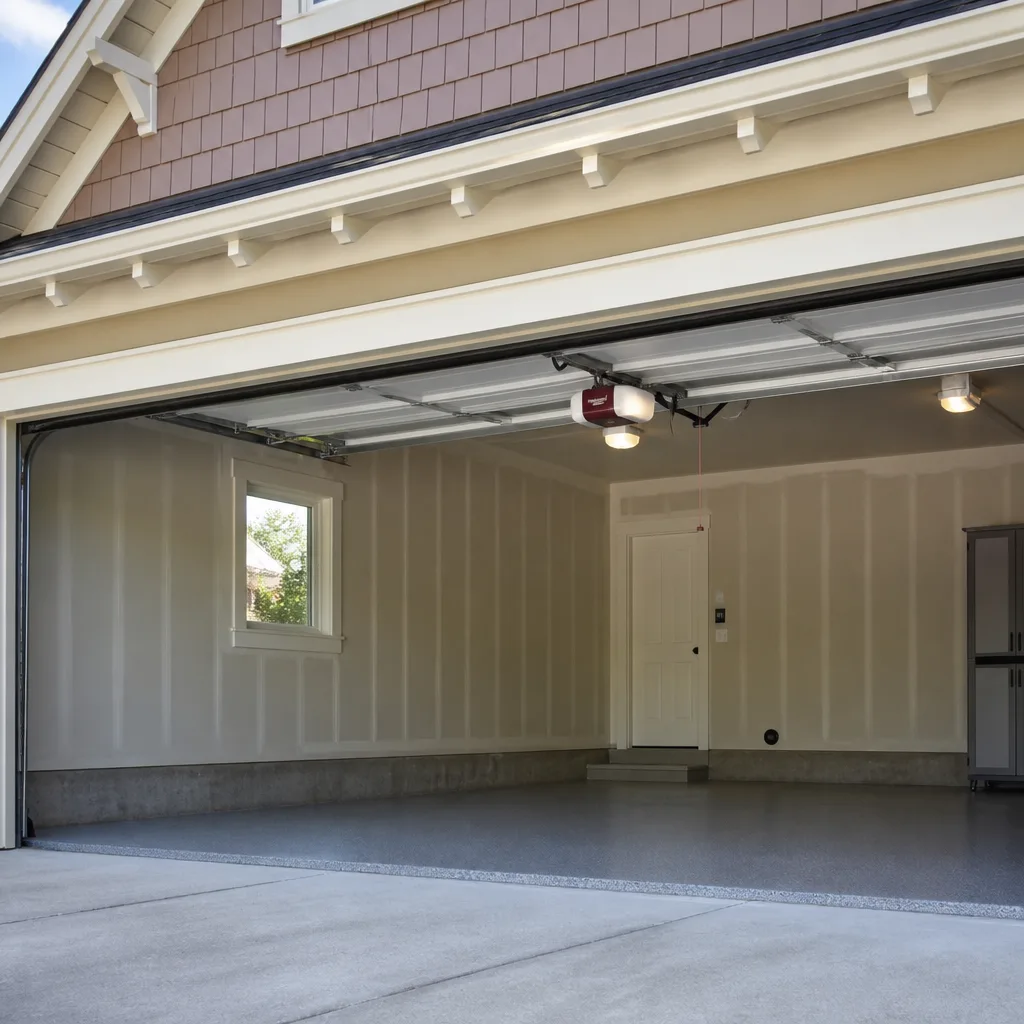 LiftMaster openers
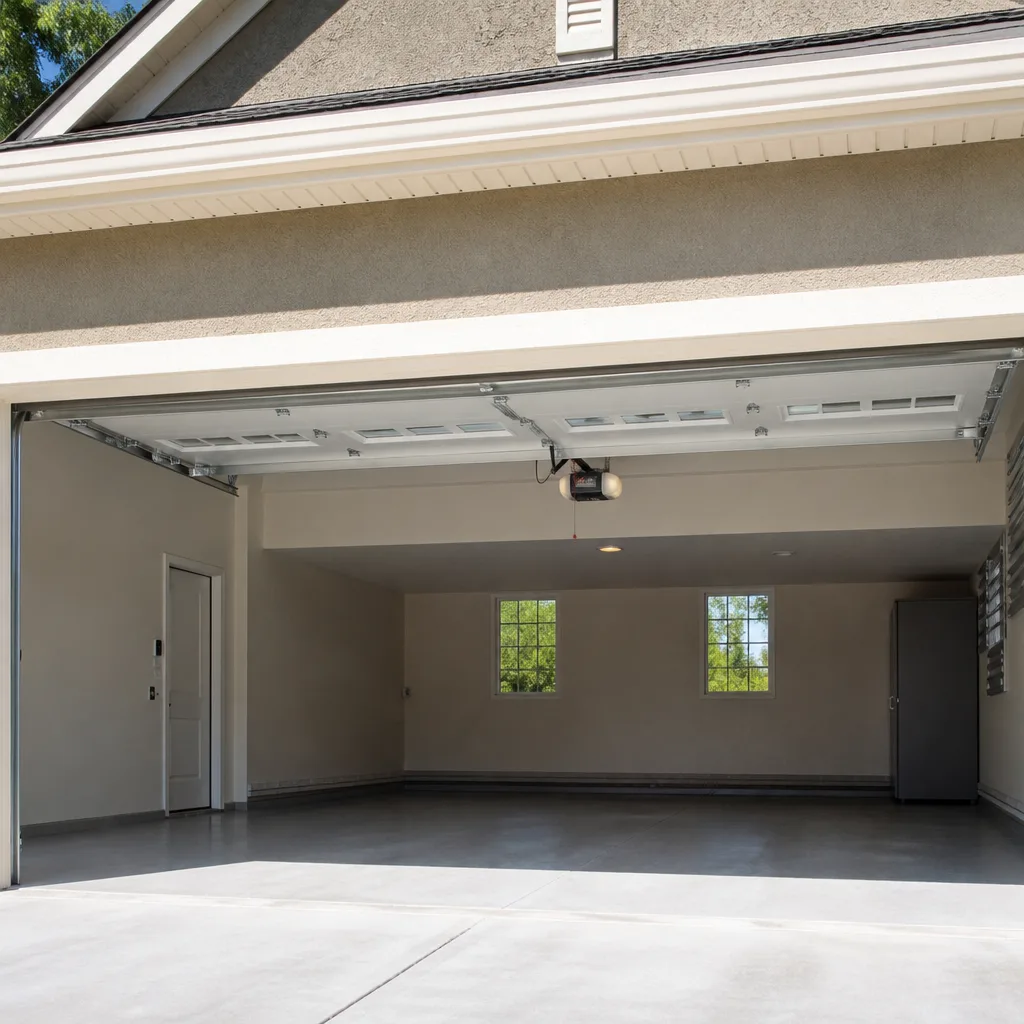 Chamberlain openers
Full 25-point door and opener safety check with every visit - springs, cables, rollers, tracks, and your LiftMaster or Chamberlain opener included
You get a price before we start. It does not change when the truck arrives.
Get your free estimateSeasonal Garage Door Care for Downey: Year-Round Homeowner’s Guide
October through December is when most Downey garage door spring failures happen, and it’s not for the reason the national home-maintenance guides would have you believe. Those guides assume cold weather snaps steel. Downey doesn’t get that kind of cold. What it gets is Santa Ana wind season, and the fine grit those winds push through every gap in your garage door tracks, rollers, and spring coils accelerates the wear that built up quietly all summer. In The Complete Garage Door Repair Guide for Downey Homeowners, you’ll learn exactly what your door needs in each of Downey’s three real climate stress periods, which checks give you the highest return for your time, and when a problem crosses the line from routine to call-a-specialist.
Quick Answer
Seasonal garage door care in Downey means inspecting and lubricating your door system at least twice a year, with specific attention to three local stress periods: the dry Santa Ana wind season (fall), the marine-layer humidity months (late spring and early summer), and the brief winter rain window. For The Complete Garage Door Repair Guide for Downey Homeowners, this routine is the foundation. The highest-value routine is a 15-minute visual and lubrication check in October, before wind season hits, plus a post-rain inspection of cables and weatherstripping in January. Replacing worn rollers and a fraying bottom seal before they fail outright prevents most mid-season breakdowns and keeps your opener from working against a door that’s fighting back.
Styles & brands we work with
- Raised-panel steel
- Carriage house
- Modern flush
- Full-view glass
- LiftMaster openers
- Chamberlain openers
Table of Contents
- Why Downey’s Climate Is Harder on Garage Doors Than Homeowners Expect
- Spring Garage Door Care in Downey: Post-Rain Recovery and Corrosion Control
- Summer Garage Door Care in Downey: Heat, UV, and Tension Checks
- Fall Garage Door Care in Downey: Santa Ana Prep Before the Winds Arrive
- Winter Garage Door Care in Downey: Rain, Debris, and Drainage
- Lubrication: The One Task That Extends Every Component’s Life
- How Downey Sun Damages Different Panel Materials Over Time
- Opener Care: The Most Neglected Part of Seasonal Maintenance
- Common Mistakes to Avoid
- When to Call a Professional
- Frequently Asked Questions
Why Downey’s Climate Is Harder on Garage Doors Than Homeowners Expect
Most garage door maintenance advice is written for climates with hard freezes, heavy snow, and ice. Downey has none of that, which makes it easy to assume your door has an easy life. The reality is more complicated. Downey sits far enough inland to get the full force of Santa Ana winds but close enough to the coast to catch marine-layer humidity that pushes up from Long Beach and the South Bay. That combination means three distinct stress cycles every year, each targeting different components.
The Santa Ana season, typically October through December, drives fine dust and grit into roller bearings, hinge pins, and spring coils. The marine-layer months, usually May through July, hold moisture against metal parts and accelerate corrosion on cables and track hardware, especially in neighborhoods closer to the 105 and 605 corridors where morning fog lingers. Winter rain, brief as it is, tests your bottom seal and the drainage around your garage slab in ways the other seasons don’t.
We work exclusively on garage doors in Downey, and we can tell you from what we see on service calls that seasonal problems here are entirely predictable. The door that fails in December often started showing symptoms in September. Knowing which symptom belongs to which season is what this guide is about.
Spring Garage Door Care in Downey: Post-Rain Recovery and Corrosion Control
By March, Downey’s rain window is usually closing, and whatever moisture got into your garage during January and February has had time to do its work. Spring is the season to address corrosion and catch early cable damage before summer heat makes everything worse.
The marine layer’s morning condensation is particularly active here from late spring through early summer. If your garage faces north or sits under mature trees, that condensation doesn’t burn off until midday, which means a solid four to six hours of elevated humidity against your door’s metal components every single morning. Cables made of galvanized steel are the first casualty. Galvanization slows rust but doesn’t stop it forever, and once rust gains a foothold, the cable’s wire strands start losing tensile strength one by one.
Spring Inspection Checklist
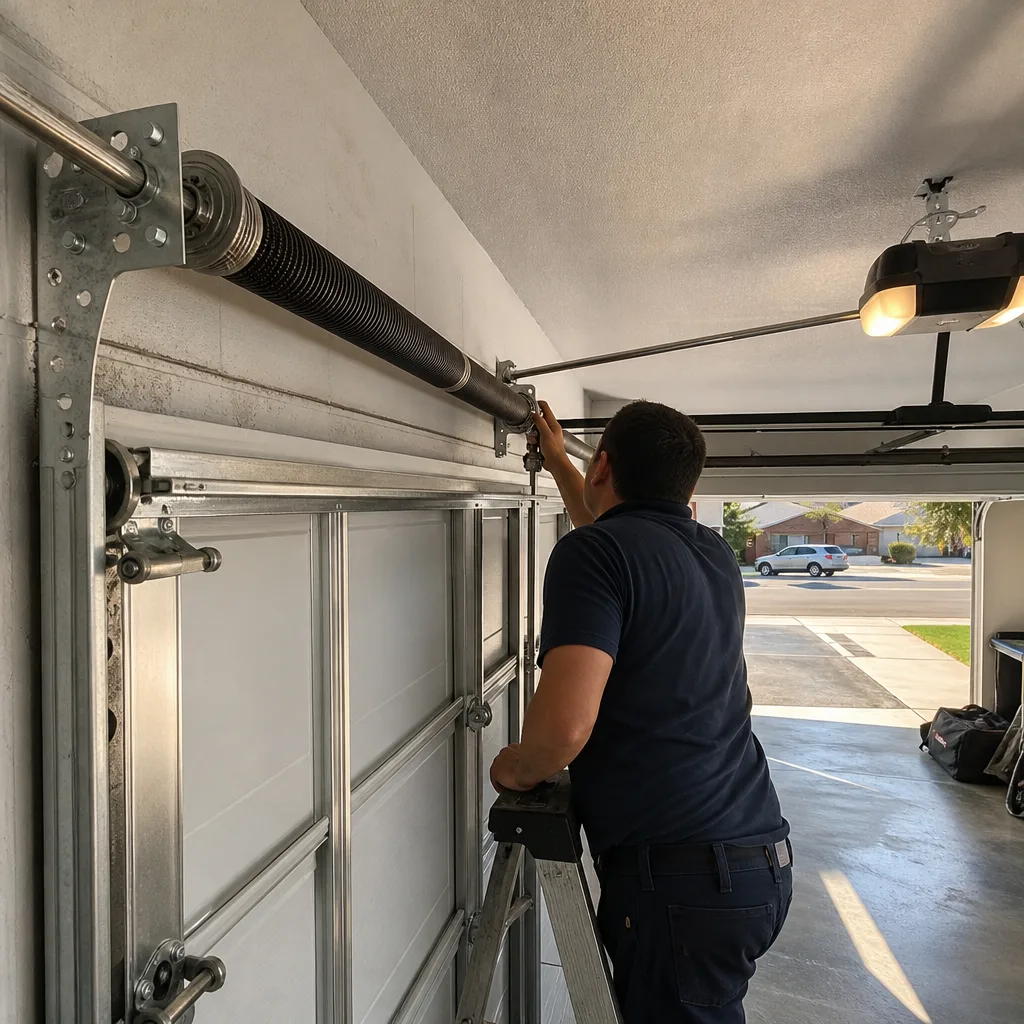
- Check both lift cables near the bottom brackets where moisture collects. Look for rust bloom, frayed strands, or any flattening where the cable wraps the drum.
- Inspect the bottom weatherstrip for cracks, flattening, or daylight visible under the closed door. A compromised seal lets in rain, dust, and rodents.
- Run the door manually (with the opener released) halfway up and let go. A balanced door stays put. If it drifts down, the springs are losing tension and should be evaluated.
- Wipe down track interiors with a dry cloth to remove winter grit and any mud splatter from storms.
- Check the photo-eye sensors at the bottom of each track. Rain splash can leave mineral deposits on the lenses that interfere with the beam.
In our experience, Choosing the Right Garage Door Brand: A Buyer’s Guide for Downey aside, the highest-ROI spring task is cable inspection. A rust-weakened cable that snaps under tension is the leading cause of the sudden, violent door-drop scenarios that send homeowners to the emergency room and garages to the repair queue. Catching fraying in March costs far less than dealing with a snapped cable in any month of the year.
Summer Garage Door Care in Downey: Heat, UV, and Tension Checks
Downey summers routinely push garage interiors past 100 degrees, and uninsulated doors facing west or southwest absorb solar radiation all afternoon. That heat does two things: it degrades nylon rollers faster than any other season, and it changes how the door’s steel panels expand and contract through the day.
Nylon rollers, the type installed on most modern doors, have bearings that depend on internal grease. Sustained heat thins that grease and causes it to migrate away from the bearing surfaces. The result is a roller that spins fine but whines, and eventually binds. Bearings that bind transfer resistance to the opener, which means your LiftMaster or Chamberlain motor works harder and runs hotter than it should. That’s the failure pattern we see most often in July and August: not the springs, but the rollers and opener running against increased friction.
Summer is also when panel expansion peaks. Steel panels are engineered with some thermal allowance, but a door that’s painted a dark color and faces the afternoon sun can get hot enough to create hairline stress around the panel joints. You won’t see these cracks, but over a few seasons they can affect the door’s squareness.
What to Do in Summer
- Lubricate rollers, hinges, and springs in the early morning before the heat builds. Use a garage-door-specific lubricant, never WD-40, which strips the existing lubrication and accelerates wear.
- Run the door through a full cycle and listen. A grinding sound from the roller area usually means bearing grease has failed in the heat.
- Test the opener’s balance by releasing it and operating the door manually. Increased panel heat slightly changes door weight distribution on some models, and a marginally balanced spring may behave fine in cool weather but drift in August.
- Check the spring coil gap. If you can see light between coils that should be touching, the spring is fatiguing and should be replaced before fall.
Fall Garage Door Care in Downey: Santa Ana Prep Before the Winds Arrive
This is the season that matters most in Downey, and it’s the one national maintenance guides get completely wrong. The Santa Ana winds that kick up in October don’t just blow leaves around. They drive fine dust, sand, and micro-debris into every opening on your garage door system, and that grit acts like sandpaper on components already stressed by summer heat.
The wind finds its way into surprising places: between the track and the wall, into the roller housings, under the bottom seal, and into the spring coils themselves. Once grit is in a roller bearing, every door cycle grinds it against the bearing surface. A bearing that would have lasted five more years can fail in one wind season.
If you only do one preventive task this fall, make it this: clean and lubricate every roller and hinge before the first major Santa Ana event, then do a quick visual wipe-down after any multi-day wind stretch. The difference in bearing life is measurable, and it’s the single highest-ROI task we recommend to Downey homeowners.
Post-Santa Ana Inspection Checklist
- Run your hand along the inside of both vertical tracks. Grit accumulates where the track meets the wall. Wipe it out with a dry cloth.
- Blow out or wipe the area around the photo-eye sensor lenses. Wind-driven dust settles on the lenses and weakens the beam, causing intermittent reversal behavior.
- Look at the panel face for new dents or scratches. Flying debris during high-wind events can dent aluminum-backed panels. Small dents are cosmetic; dents that distort the panel’s edge can interfere with the door’s travel.
- Check the bottom seal for embedded grit. Wind pushes sand under the door, and the seal’s rubber lip can trap particles that then grind against the threshold every cycle.
- Listen for new sounds during operation. A chirping or clicking that wasn’t there a week ago is often grit in a bearing. Address it before it becomes a grind.
We see a measurable spike in spring and roller replacements in Downey during November and December, and nearly every one of those failures traces back to wind-driven grit that should have been cleaned out in October. This is also the season to evaluate your current door if you’ve been planning a replacement. A door that’s already close to the end of its service life is the one most likely to fail catastrophically during the first hard wind event. For homeowners considering an upgrade, our Garage Door Installation in Downey page covers what’s involved in planning a replacement.
Winter Garage Door Care in Downey: Rain, Debris, and Drainage
Downey’s winter rain window is short compared to most of the country, but it’s the season when water intrusion problems become obvious. The bottom weatherstrip is your first line of defense, and by January it has been baking in summer sun and grinding against the slab for a full year. A hardened, flattened seal doesn’t just let water in; it lets in the cold air that makes your garage uncomfortable and the insects that are seeking shelter.
Debris is the other winter problem. Eucalyptus leaves, palm fronds, and the fine sediment that washes off roofs all end up against the door’s bottom edge after a storm. When enough debris builds up, the door’s auto-reverse can trigger on a leaf rather than a person, or worse, the door can close on a hard object and force itself out of alignment.
Winter Tasks for Downey Homeowners
- Replace the bottom seal if it has hardened. Press it with your thumb. If it doesn’t spring back, it’s time. A new seal runs under $30 and takes about 15 minutes.
- Sweep the threshold area after each significant rain. Remove leaves and sediment before the door closes on them.
- Inspect the garage floor for new cracks that appeared during the first heavy rain. Cracks near the door’s path can catch the seal and tear it.
- Check the top of the door where it meets the header. Wind-driven rain can enter through a worn top seal, dripping onto the opener rail and motor housing.
- Run the opener through a full cycle during the driest part of a rainy week. Doors that sit closed for days during rain develop surface rust on hinges and springs faster than doors that get daily movement.
If your door has been misbehaving only during or after rain, that’s a diagnostic clue. Intermittent reversal in wet weather usually points to photo-eye sensor issues, while slow or labored opening in the morning often means rusted rollers or track bearings that stiffened overnight in the moisture. Both are fixable, and earlier is cheaper.
Lubrication: The One Task That Extends Every Component’s Life
If you do nothing else from this guide, lubricate your garage door twice a year, in October and April. Here’s what matters and what doesn’t. The lubricant matters. Use a product made specifically for garage doors, something with a light carrier that penetrates and a lithium or silicone base that stays put. WD-40 is a solvent and a water displacer, not a lubricant. It strips away the existing lubrication film and leaves metal surfaces more vulnerable than before.
Most Downey homeowners lubricate too much and too often. A single light coat, applied twice a year, outperforms heavy quarterly applications. The goal is a thin film on moving metal surfaces, not a wet coating that attracts dust, which then turns into an abrasive paste. After applying, run the door through a full cycle and wipe away any excess, especially from track surfaces where rollers must maintain clean contact.
The components to lubricate are the rollers (the bearing area, not the track), the hinge pivot points, the spring coil surface, and the bolt heads on the track brackets. You can lubricate a Wayne Dalton or Raynor torsion spring the same way you’d treat any other, but if you have a Wayne Dalton TorqueMaster system, the spring sits inside a tube and does not require surface lubrication. Knowing your system matters, which is one reason we’re Garage Door Repair in Downey specialists rather than generalists.
How Downey Sun Damage Affects Different Panel Materials Over Time
Downey’s UV exposure is relentless. The city gets more than 280 sunny days per year, and a west-facing garage door absorbs direct afternoon sun from roughly 1 p.m. until sunset for most of the year. That radiation ages different panel materials at different rates, and knowing your panel type tells you what to expect and when.
Steel panels are the most common and the most UV-resistant structurally. The steel itself doesn’t degrade from sun, but the paint finish does. Modern steel doors use a polyester or polyurethane topcoat that’s rated for roughly 10 to 15 years of full sun before visible fading sets in. In Downey, a steel door facing west will typically show noticeable fading on the lower portion of the top panel by year 7 or 8, because that area gets the most direct exposure at the steepest angle. Fading is cosmetic, but it’s also the first sign that the protective clear coat is breaking down, which eventually exposes the paint to chalkiness.
Fiberglass panels, once popular in Southern California, have largely fallen out of favor because of their vulnerability to this exact climate. Fiberglass takes heat and UV in a way that causes the gel coat to craze, a network of tiny hairline cracks that looks like spider webbing across the panel surface. Once crazing starts, moisture penetrates through to the fiberglass mat, and the panel begins to degrade structurally. In our experience, fiberglass doors in Downey show visible aging within five years, sometimes less on western exposures.
Wood composite panels, often sold as a premium alternative, split the difference. The composite material resists UV better than natural wood, but the factory finish typically includes a paint or stain layer that needs recoating every three to five years under Downey’s sun. The edges and any areas around window cutouts are the first places the finish breaks down, because that’s where the material’s density changes and expansion rates differ.
For any panel type, the practical guidance is the same: note what your door looked like when new, and track changes annually. If your door is reaching the point where UV fading or surface degradation affects its appearance, that’s the time to think about whether a new door makes more sense than living with a worn one. A garage door installation in Downey is a bigger commitment than a repair, but it’s also the only fix for a panel material that has reached the end of its cosmetic life.
Opener Care: The Most Neglected Part of Seasonal Maintenance
Homeowners treat the opener as an appliance that either works or doesn’t, and that’s why opener failures are the most common surprise we get called for in Downey. The opener isn’t a set-and-forget device. It’s a motor coupled to a door through a chain, belt, or screw, and every ounce of extra resistance in the door system gets transferred directly to that motor.
The seasonal connection is simple: a door whose rollers, hinges, or springs are degraded from heat, grit, or moisture requires more force to move. Your LiftMaster or Craftsman opener compensates by pulling harder, which means hotter operation, faster internal wear, and a shorter lifespan. Most opener “failures” in our service area are actually door-system resistance problems that destroyed an otherwise healthy opener.
Twice a year, test the opener’s force settings. Here’s the procedure:
- Close the door fully.
- Place a 2×4 flat on the floor directly under the door’s path.
- Close the door again using the opener.
- The door should reverse immediately upon contact with the 2×4, before the wood compresses.
If the door doesn’t reverse, or if it crushes the wood before changing direction, the force sensitivity needs adjustment, and that’s a job for a technician who knows your specific opener’s programming. We handle Garage Door Opener Repair in Downey as its own specialty, because this is the component most general contractors refer out or attempt and botch.
Also check the opener’s annual status: the rail and chain or belt condition, the motor housing for evidence of grease leakage, and the wall console’s LED indicators, which vary by brand and model year. A Chamberlain from 2015 communicates differently than a LiftMaster from 2022, and knowing these quirks in advance is exactly the kind of thing that makes brand-specific expertise matter.
Common Mistakes to Avoid
- Lubricating with the wrong product. WD-40, cooking spray, and general-purpose silicone sprays are not garage door lubricants. They strip existing lubrication and attract abrasive dust, which is exactly what Santa Ana season doesn’t need.
- Skipping the balance test. A door that drifts when disengaged from the opener is telling you the springs are tired. Most Downey homeowners ignore this check until the door won’t stay up.
- Ignoring small sounds. A chirp or squeak that appears in October is often grit in a bearing, and it gets louder and more expensive as wind season continues. Sound is an early warning system.
- Cleaning sensor lenses with a dirty cloth. You’re just smearing whatever dust was on the cloth onto the lens. Use a dry microfiber, or at minimum a clean, dry paper towel.
- Painting moving parts. Hinges, roller shafts, and spring coils should not be painted. Paint adds thickness and changes tolerances, and on spring coils it can interfere with the coil gaps.
- Replacing only the broken component during a repair. When one roller fails from wind-driven grit, the others are usually not far behind. Replacing the full set costs less per roller than doing them one at a time.
- Waiting for the door to fail completely before calling anyone. In Downey, seasonal stress is predictable. A scheduled service in October is always cheaper than an emergency call in December. We see both, and the difference is substantial.
When to Call a Professional
Some tasks are safe for an attentive homeowner: cleaning tracks, checking weatherstripping, testing balance, wiping sensor lenses, and applying lubrication. Others are not. Torsion springs carry enough tension to seriously injure or kill, and any work on them belongs exclusively to trained technicians with the specific tools and safety protocols for the job. The same applies to lift cables, which share that tension load, and to any opener repair involving the motor unit, internal gears, or circuit board.
Ask yourself these questions: Is the spring involved? Is a cable frayed or off its drum? Did the opener start making a buzzing sound with no door movement? Is the door hanging unevenly on one side? If any answer is yes, stop and make the call. Garage Door Service Downey offers free estimates in Downey, call (844) 734-1196.
Frequently Asked Questions
Twice a year, in April and October. That schedule aligns with the end of the marine-layer moisture season and the start of Santa Ana wind season, which are the two periods when lubrication makes the biggest difference for component life in Downey’s climate.
Wind-driven grit works its way into roller bearings, hinge pins, and spring coils, and that grit acts as an abrasive inside moving parts. The noise you’re hearing is the sound of that grit grinding against bearing surfaces. A cleaning and re-lubrication during a windy period typically resolves it.
No, and this is the one repair where DIY is genuinely life-threatening. Torsion springs hold enormous stored energy, and a spring that snaps during removal can cause severe injury. This is always a professional repair, and in most cases it’s also a two-spring replacement, because springs are installed in matched pairs. Call us at (844) 734-1196 for an exact quote, estimates are free.
Ten to fifteen years is typical for a quality belt-drive or chain-drive opener in Downey, assuming the door system it’s connected to stays well maintained. Heat is the bigger killer here than humidity, and an opener pushing against a door with worn rollers will burn out noticeably sooner than one that isn’t fighting resistance.
Yes. Morning condensation from the marine layer holds against metal components for several hours on many days between May and July, especially in the southern and western parts of Downey. Galvanized cables resist rust initially, but the coating wears thin over years, and once moisture reaches the steel, the cable begins losing strength. That’s why we recommend visual cable checks every spring.
Check the photo-eye sensor lenses for dust, grime, or mineral deposits, and make sure both sensors are aligned. After that, sweep the threshold area for debris that might trip the safety reversal. If both check out and the problem persists, it’s time for a professional diagnostic on the force settings or the sensor wiring. Call (844) 734-1196 for that, it’s a fast diagnosis.
The Bottom Line
Downey garage doors fail on a predictable schedule dictated by three local climate forces: Santa Ana grit, marine-layer moisture, and UV exposure from one of the sunnier stretches of the Los Angeles basin. The homeowner who understands that schedule and does a small amount of seasonal work, lubrication in April and October, cable checks in March, balance tests in August, and the post-wind checklist before every major Santa Ana event, will get years more life from a door and opener than the homeowner who waits until something breaks. We fix what’s broken, but we’d rather help you avoid the breakdown entirely. See more guides & resources for year-round maintenance tips. That’s what seasonal care is for.
Written by the team at Garage Door Service Downey, serving Downey since 2016. We work exclusively on garage doors. It’s all we do, and it shows. For answers about your specific door, call (844) 734-1196.
See the difference
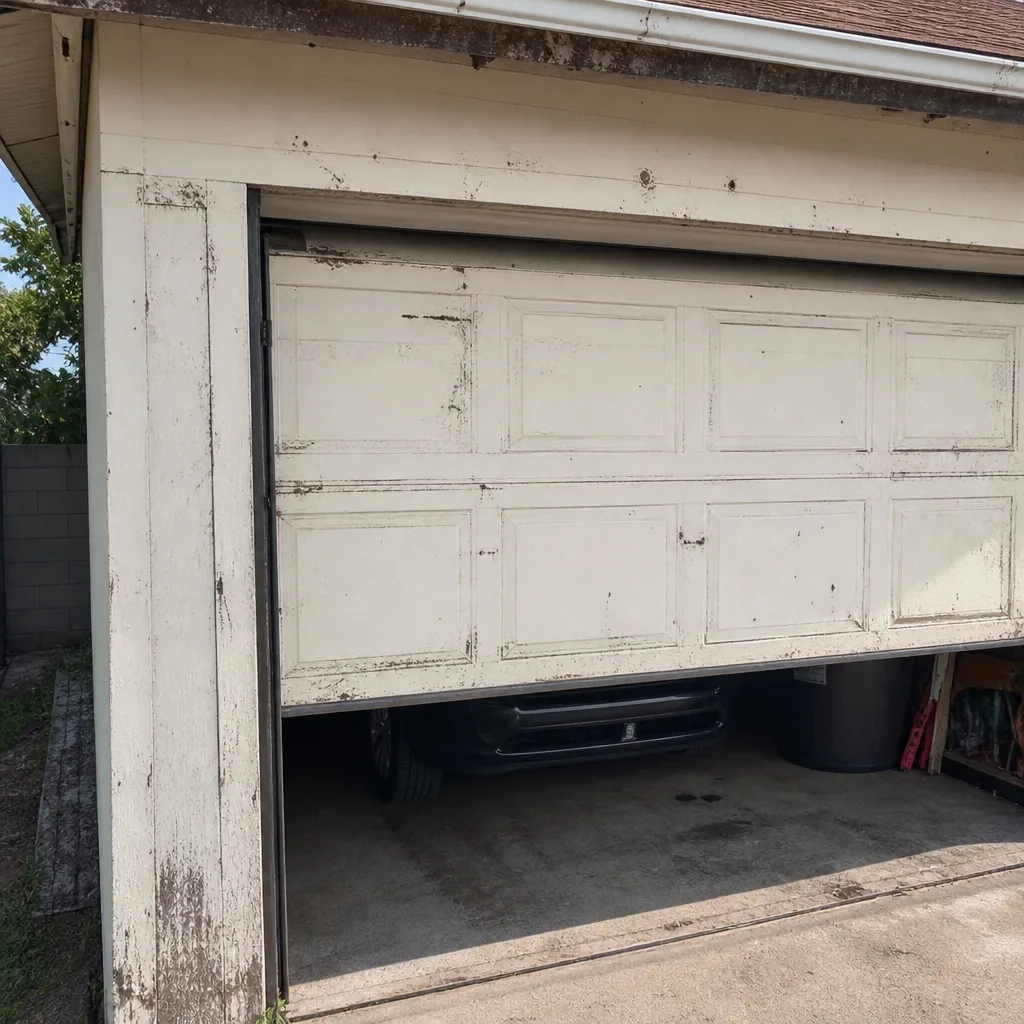 Before
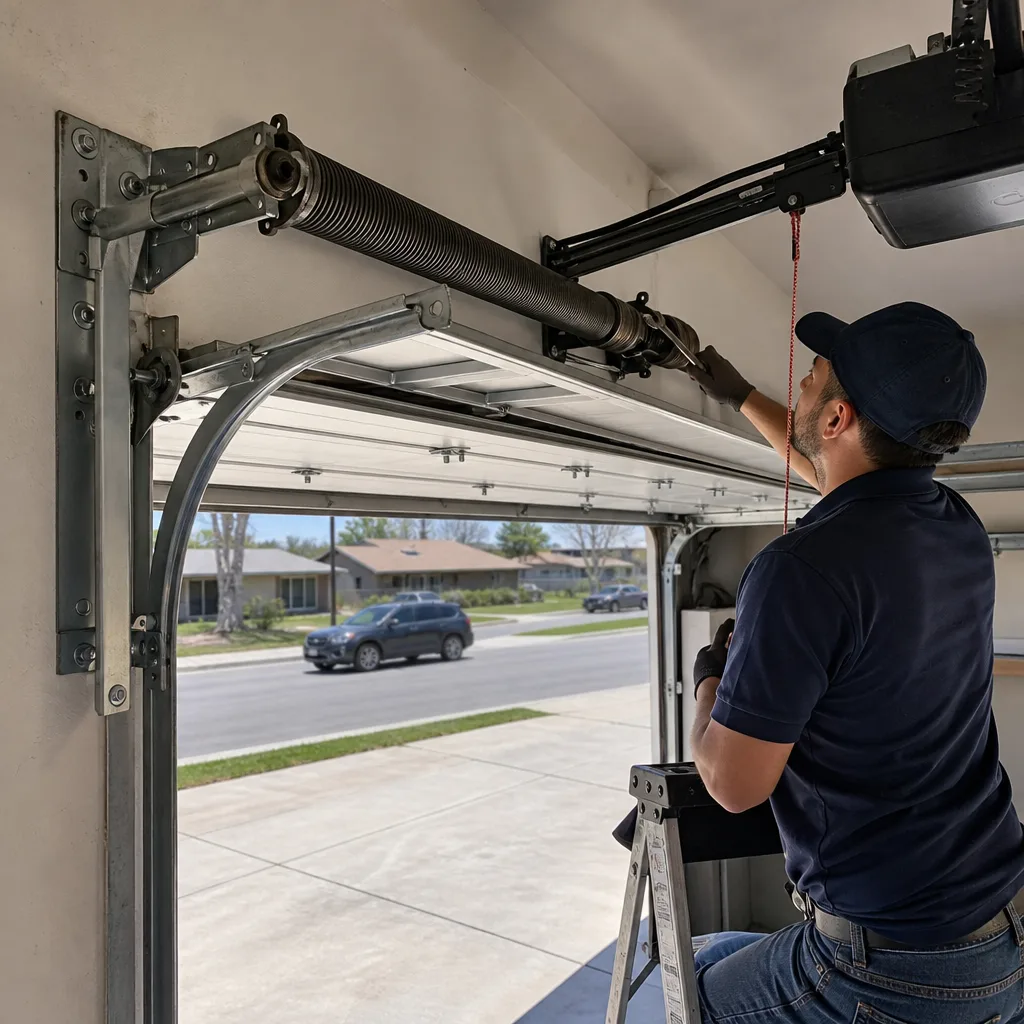 After
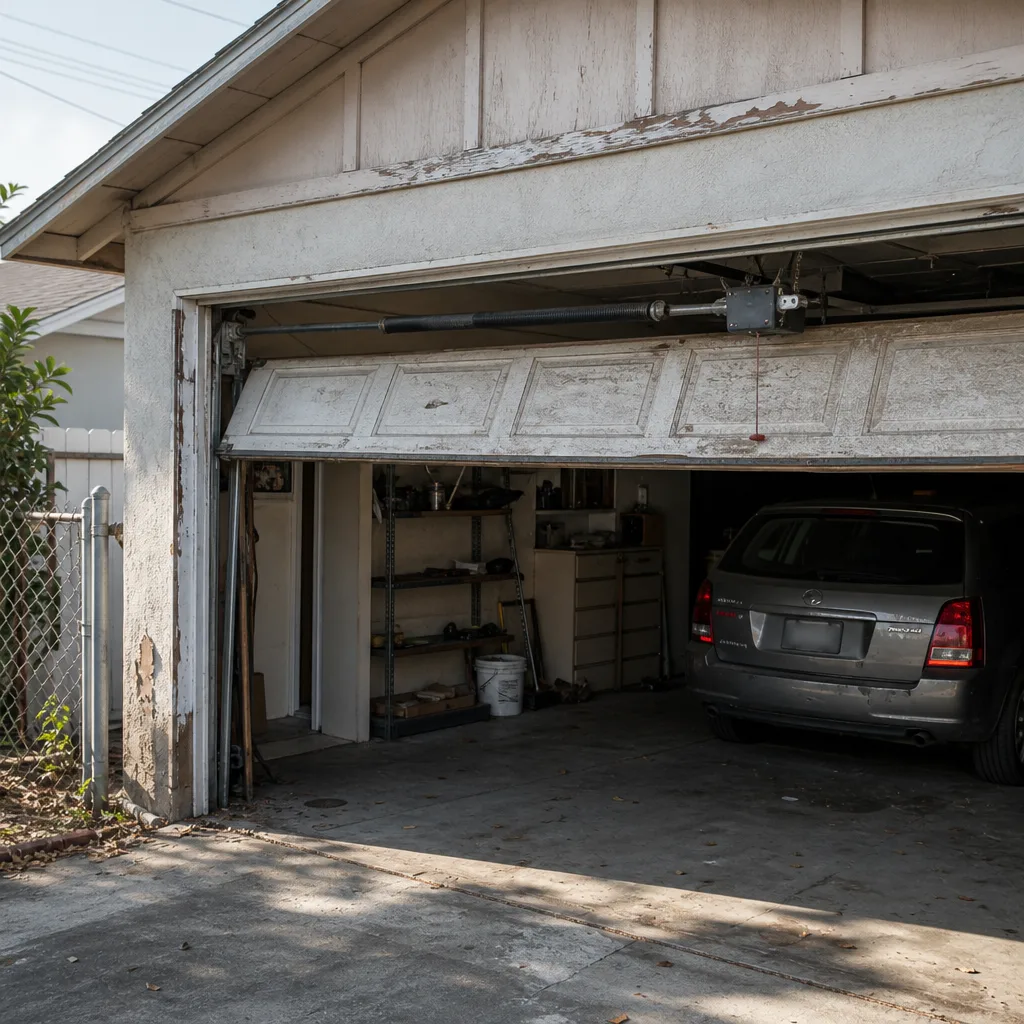 Before
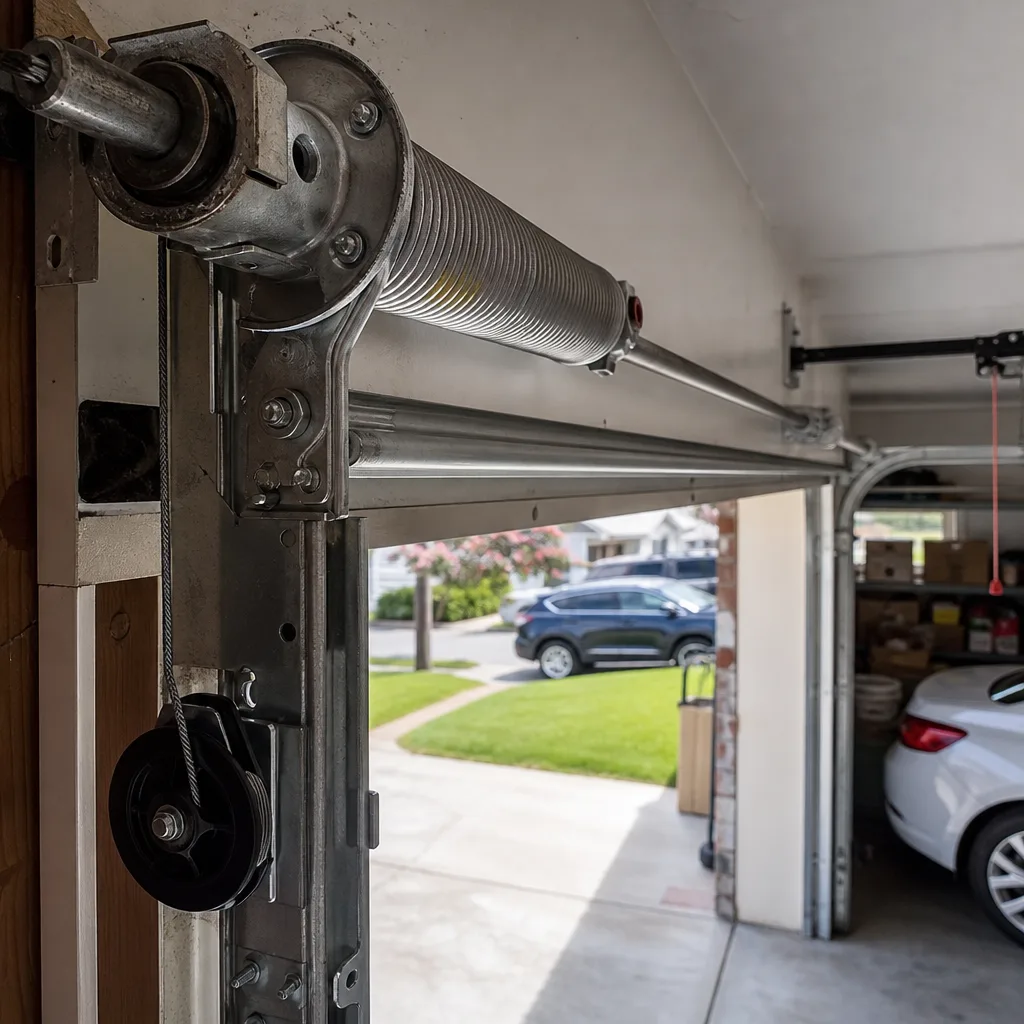 After
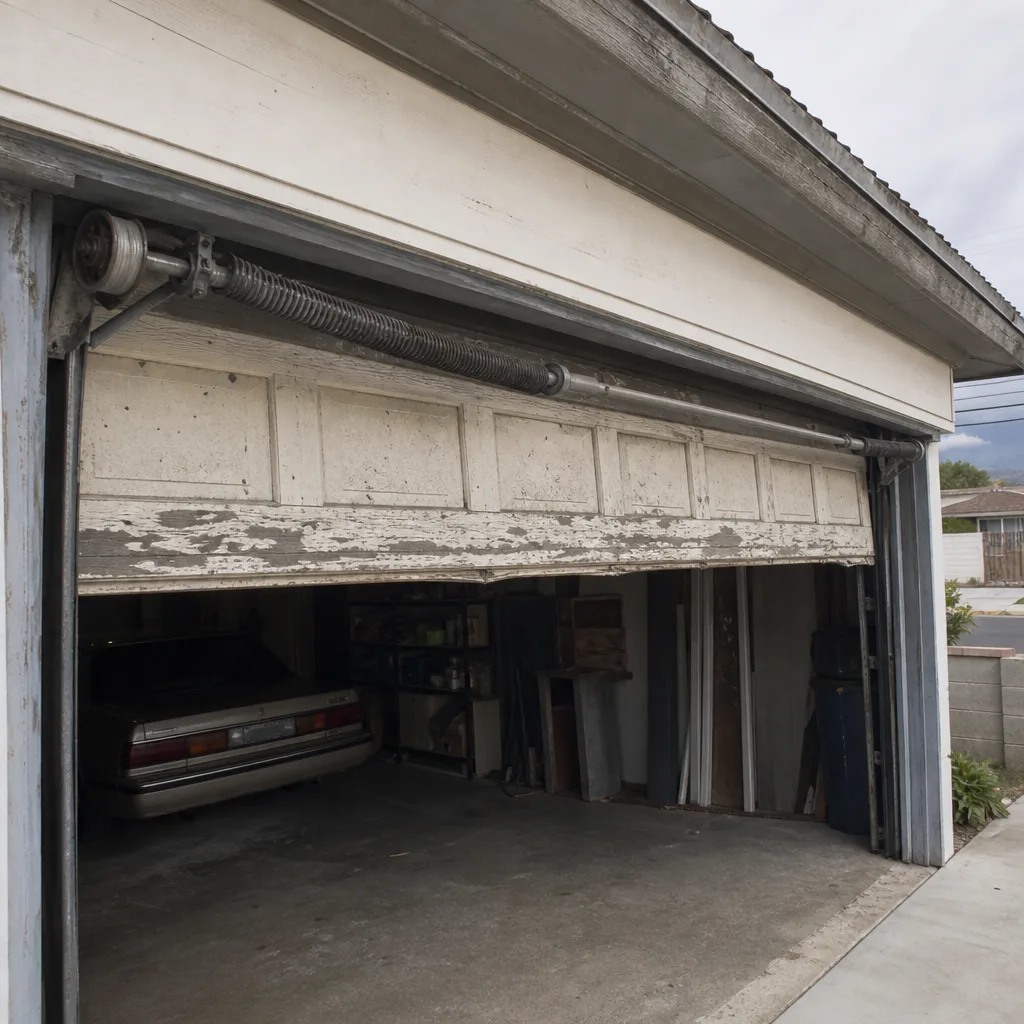 Before
 After