
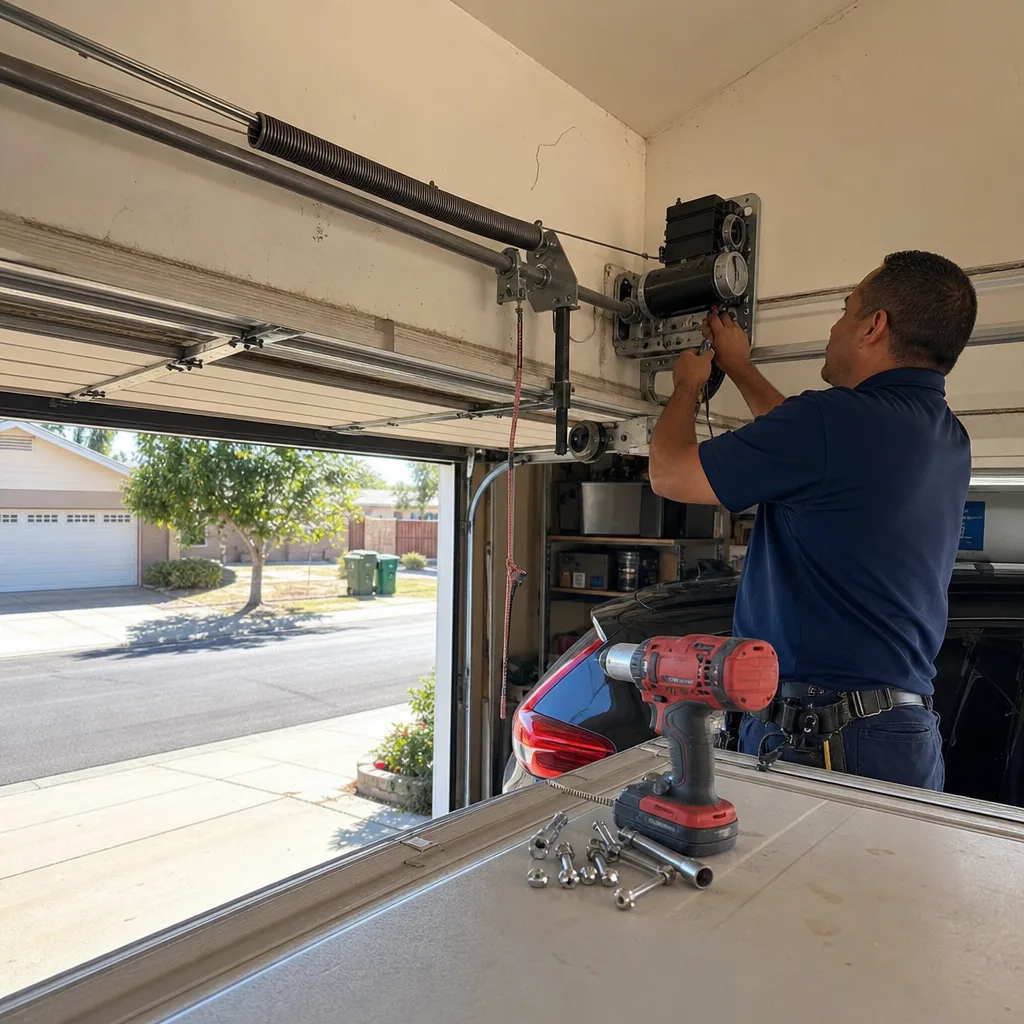
Last updated November 3, 2026
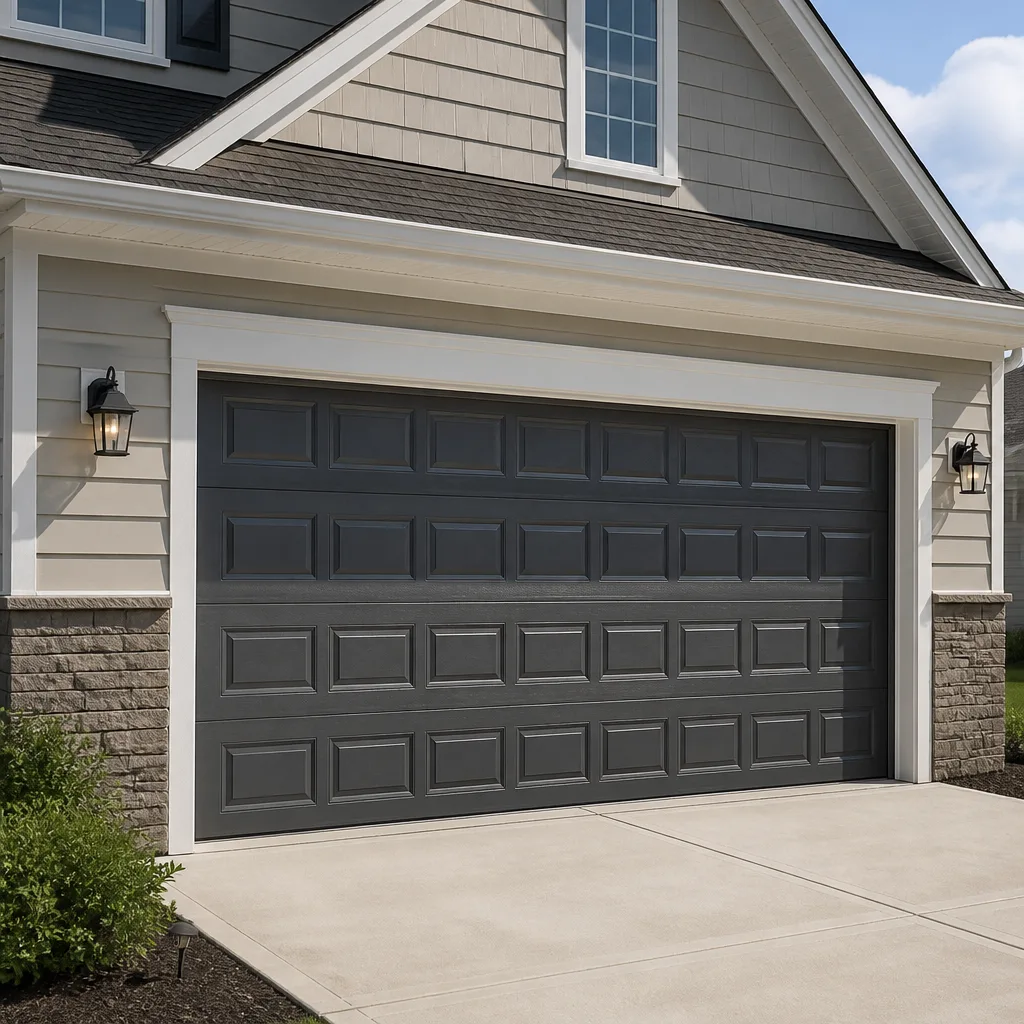 Raised-panel steel
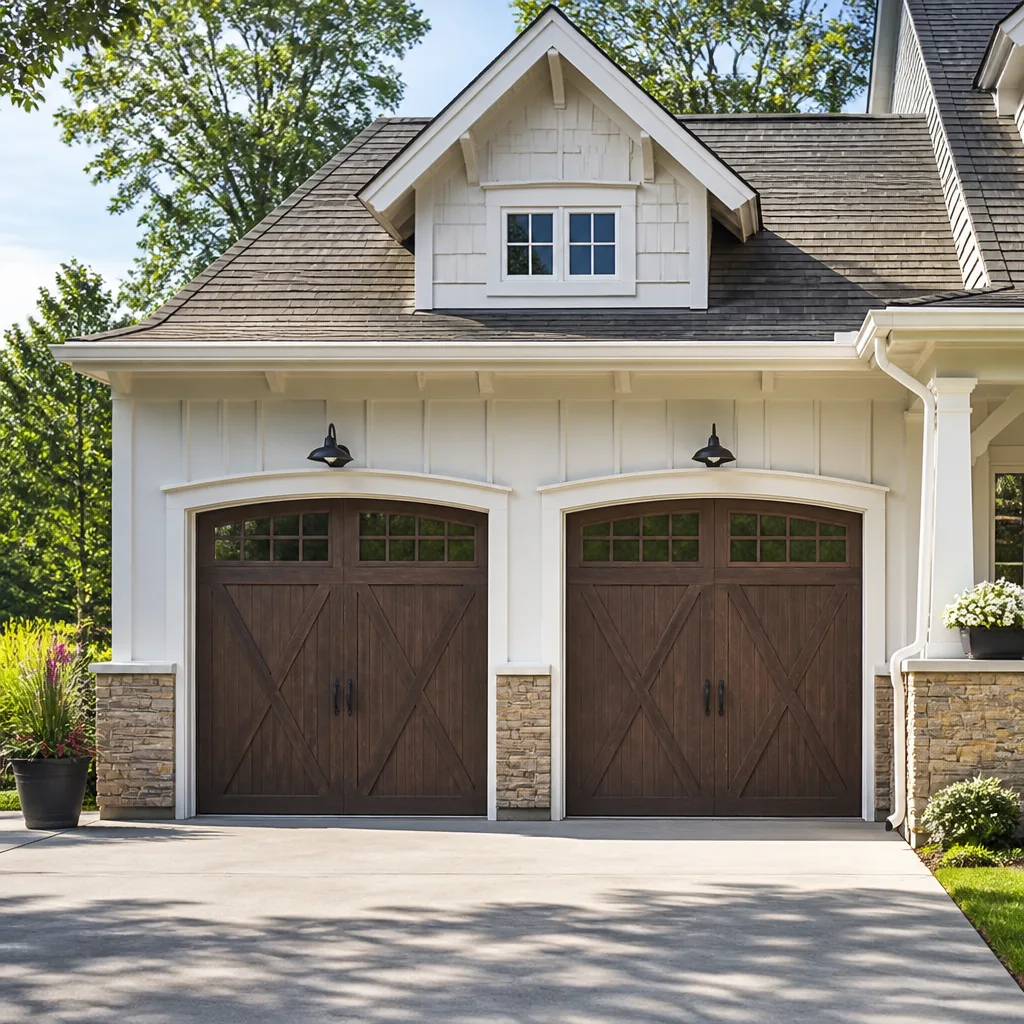 Carriage house
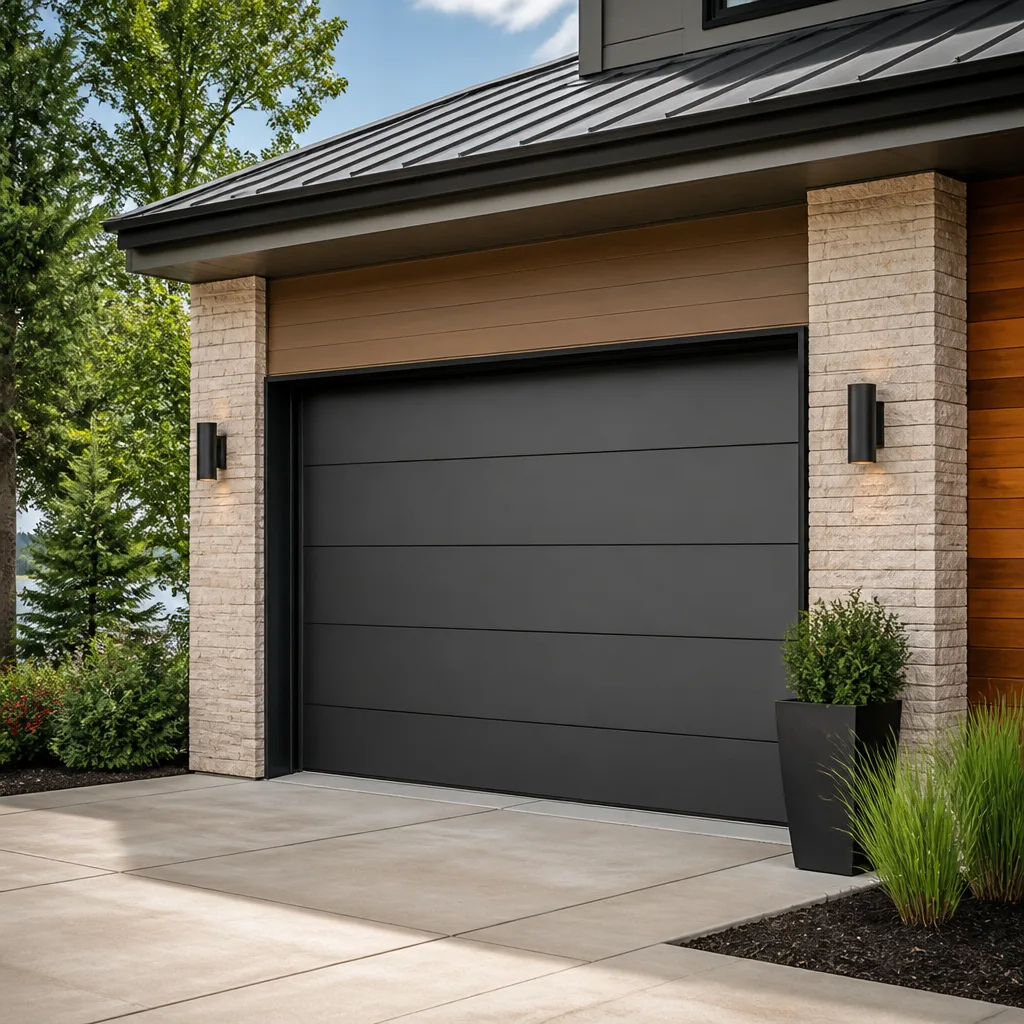 Modern flush
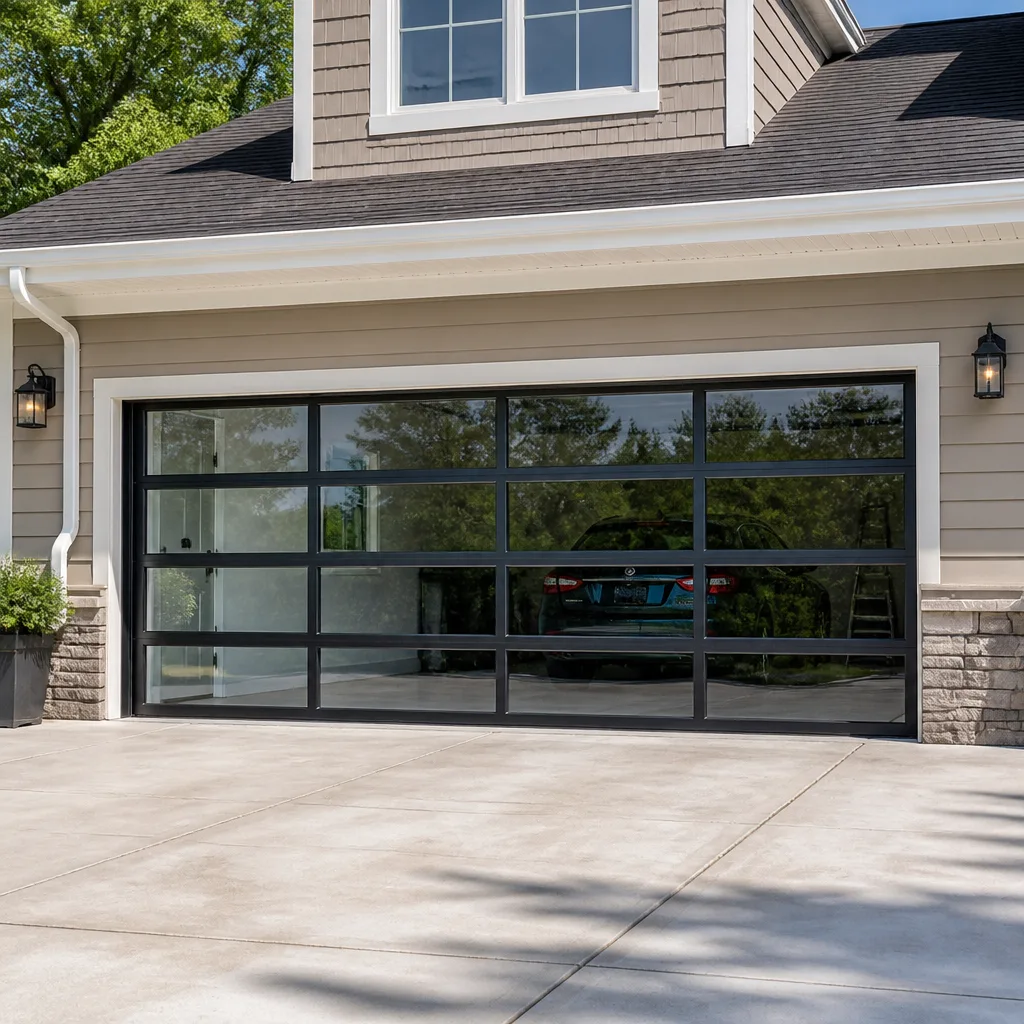 Full-view glass
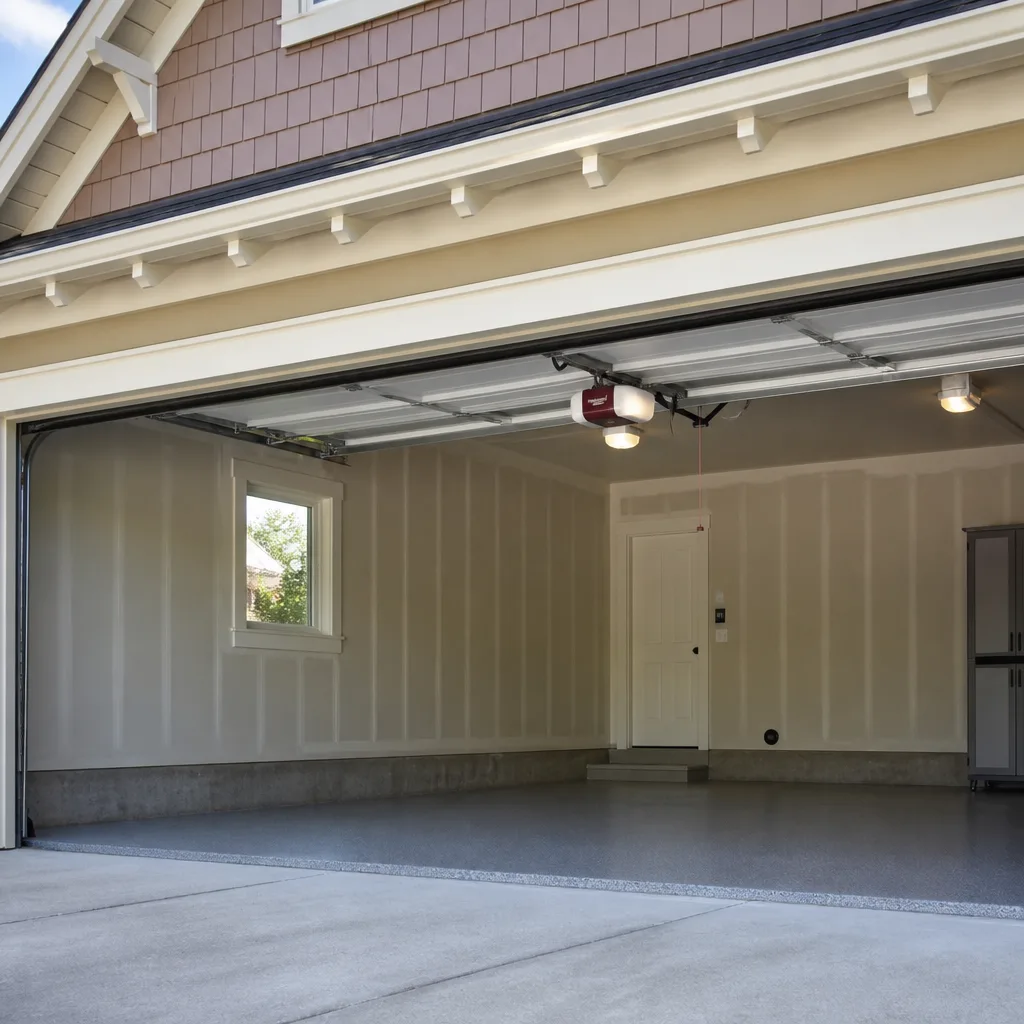 LiftMaster openers
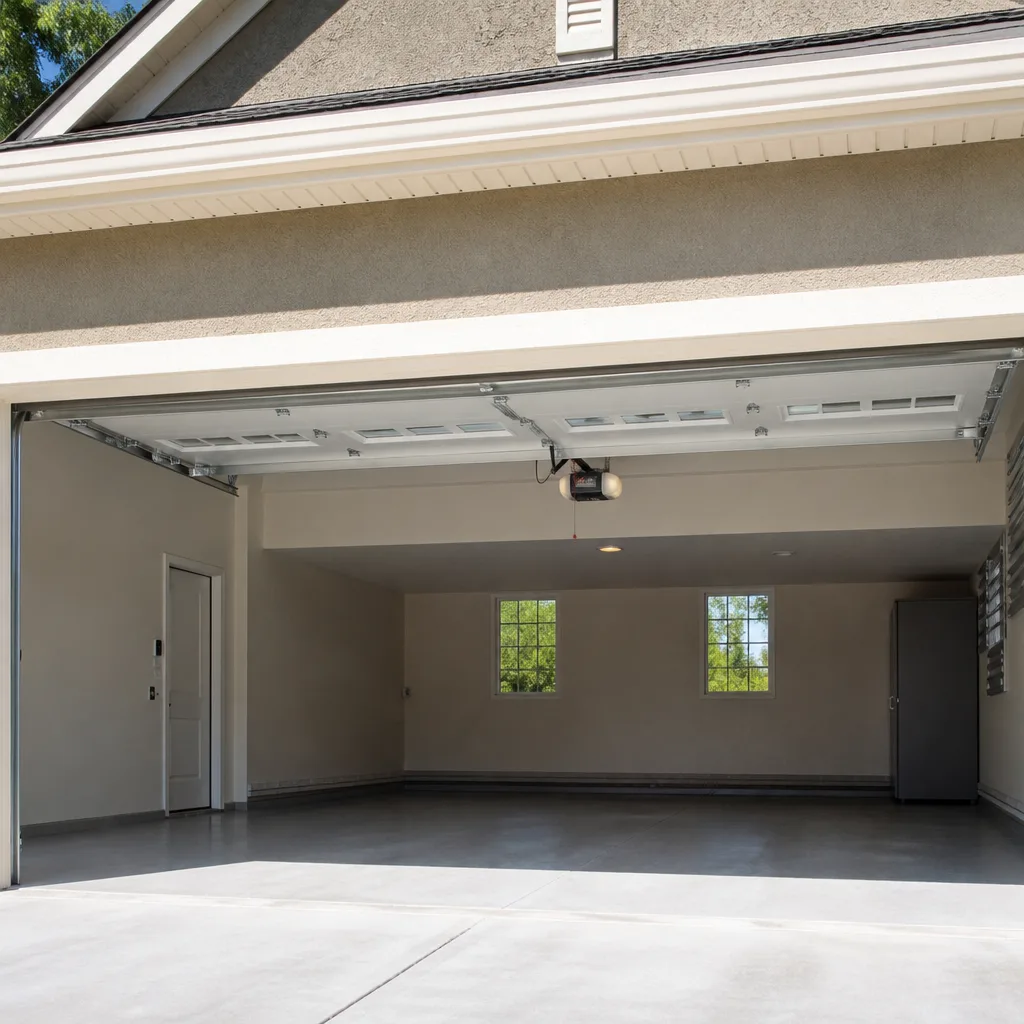 Chamberlain openers
Full 25-point door and opener safety check with every visit - springs, cables, rollers, tracks, and your LiftMaster or Chamberlain opener included
You get a price before we start. It does not change when the truck arrives.
Get your free estimateThe Complete Garage Door Repair Guide for Downey Homeowners
A garage door has exactly six systems that can fail. Every problem, every noise, every stuck door, every snapped cable traces back to one of them. Once you know which system is involved, you’ve cut your diagnostic guesswork in half before a technician even pulls into your driveway. Most Downey homeowners call a garage door repair company for problems they could safely confirm themselves in five minutes, and some get upsold on parts they don’t need along the way. This guide maps every repair category by mechanical system, not by symptom, so you know what’s broken, what it should cost, and whether it’s worth fixing before you ever pick up the phone. If you live in Downey, your garage door works harder than most, thanks to our specific climate, and the failure patterns we see here are different from what a technician in Riverside or Long Beach deals with.
Styles & brands we work with
- Raised-panel steel
- Carriage house
- Modern flush
- Full-view glass
- LiftMaster openers
- Chamberlain openers
Quick Answer
Garage door repair in Downey typically costs between $125 and $400 depending on the failed component, with spring replacement averaging $180 to $340 and opener repair running $150 to $300. For a deeper look at local options, see The Complete Guide to Garage Door in Downey. Most repairs are completed in a single visit, and the parts a Downey door needs are usually already on the technician’s truck before they arrive. If the door won’t open at all, the problem is almost always the spring, the opener, or a snapped cable, and a trained eye can tell which in under ten minutes.
Table of Contents
- The Six Systems: How a Garage Door Actually Works
- Spring Repair: The Most Common Downey Failure
- Cable Repair: The Repair That Prevents Bigger Repairs
- Track and Roller Repair: When the Door Fights Back
- Opener Repair: The Most Neglected System
- Weatherseal and Bottom Seal: Downey’s Hidden Wear Item
- What Fails First on Your Brand: A Field Guide
- Common Mistakes to Avoid
- When to Call a Professional
- Frequently Asked Questions
- The Bottom Line
The Six Systems: How a Garage Door Actually Works
Every garage door ever installed in Downey, whether it’s a brand-new Raynor in Northeast Downey or a thirty-year-old wood door near Downey Landing, runs on six mechanical systems. That’s the whole list. When something goes wrong, the failure is in one of these six places, and every one of them fails in a characteristic way that you can learn to recognize from your driveway without touching a thing.
The six systems are:
- Springs (torsion or extension) that counterbalance the door’s weight
- Cables that transfer spring tension to the door itself
- Tracks that guide the door’s travel path from closed to open
- Rollers that carry the door along those tracks
- The opener (motor, rail, belt or chain, and logic board) that automates the lift
- Weatherseal (bottom seal and perimeter stripping) that protects the door and everything behind it
That’s it. A door that won’t open all the way is a spring, cable, or opener problem. A door that’s loud is a roller or track problem. A door with daylight showing under it is a weatherseal problem. In our experience in Downey, a surprising number of “opener problems” turn out to be spring problems, because a failing spring forces the opener motor to work harder until it burns out or trips its safety circuit. Knowing which system is involved changes the conversation you have with any repair company, because you can describe the failure accurately instead of saying “it’s broken.”
Spring Repair: The Most Common Downey Failure
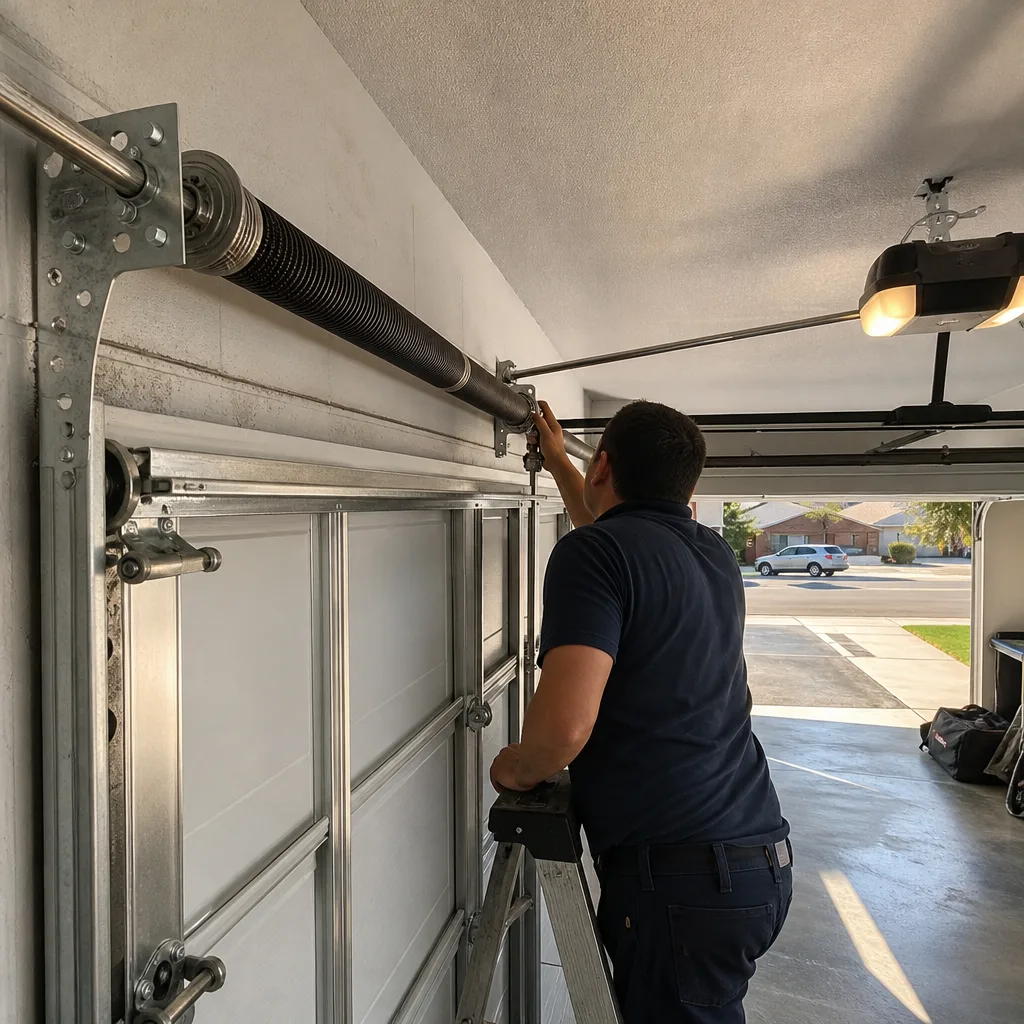
Garage door springs in Downey fail more often than any other component, and they fail on a schedule, not randomly. A standard torsion spring is rated for about 10,000 cycles, which is one full open-and-close. For a Downey household that uses the garage as the front door, which most of us do, that’s two to four cycles a day, or roughly 1,000 to 1,500 cycles a year. A spring rated for 10,000 cycles lasts seven to ten years in a house where the garage door gets used like a car door. When it fails, it fails completely and without warning, usually with a bang that sounds like a car backfiring in your garage.
Here’s what to look for before you call anyone:
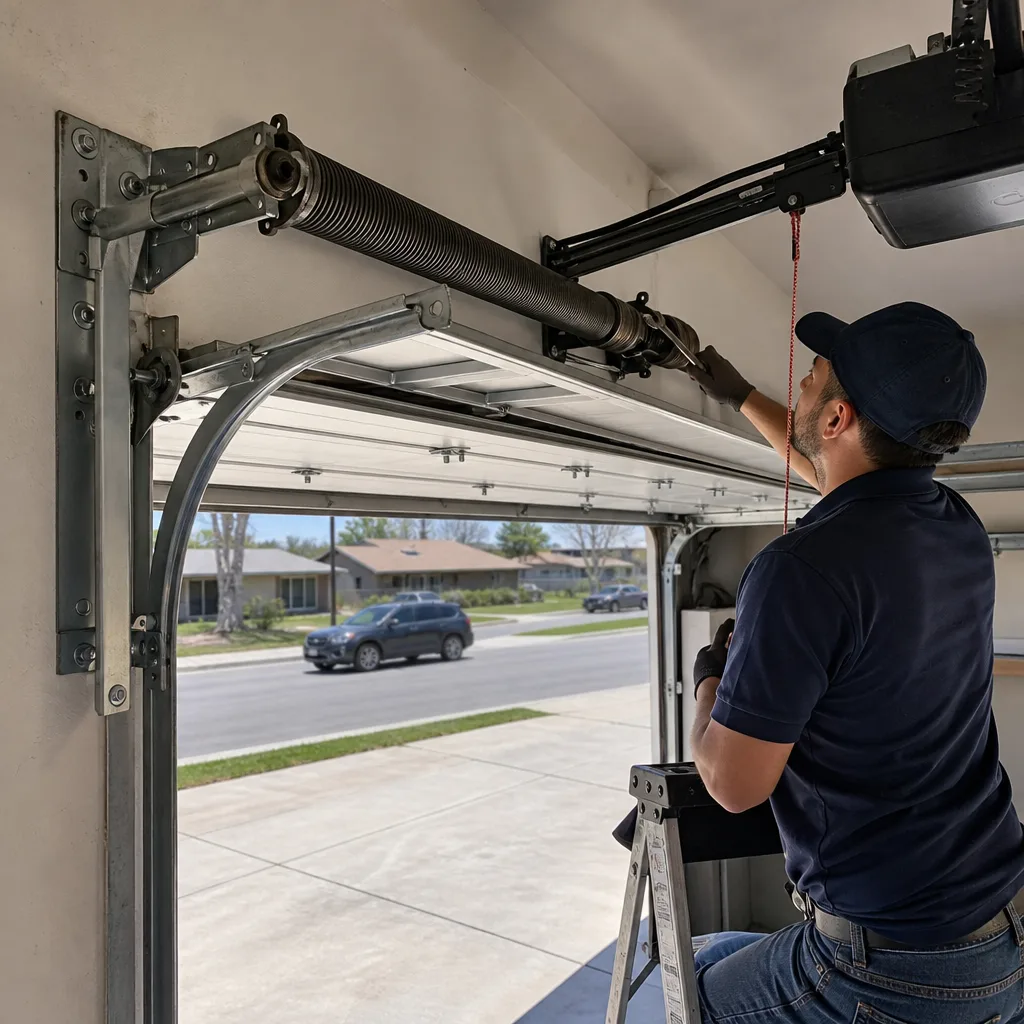
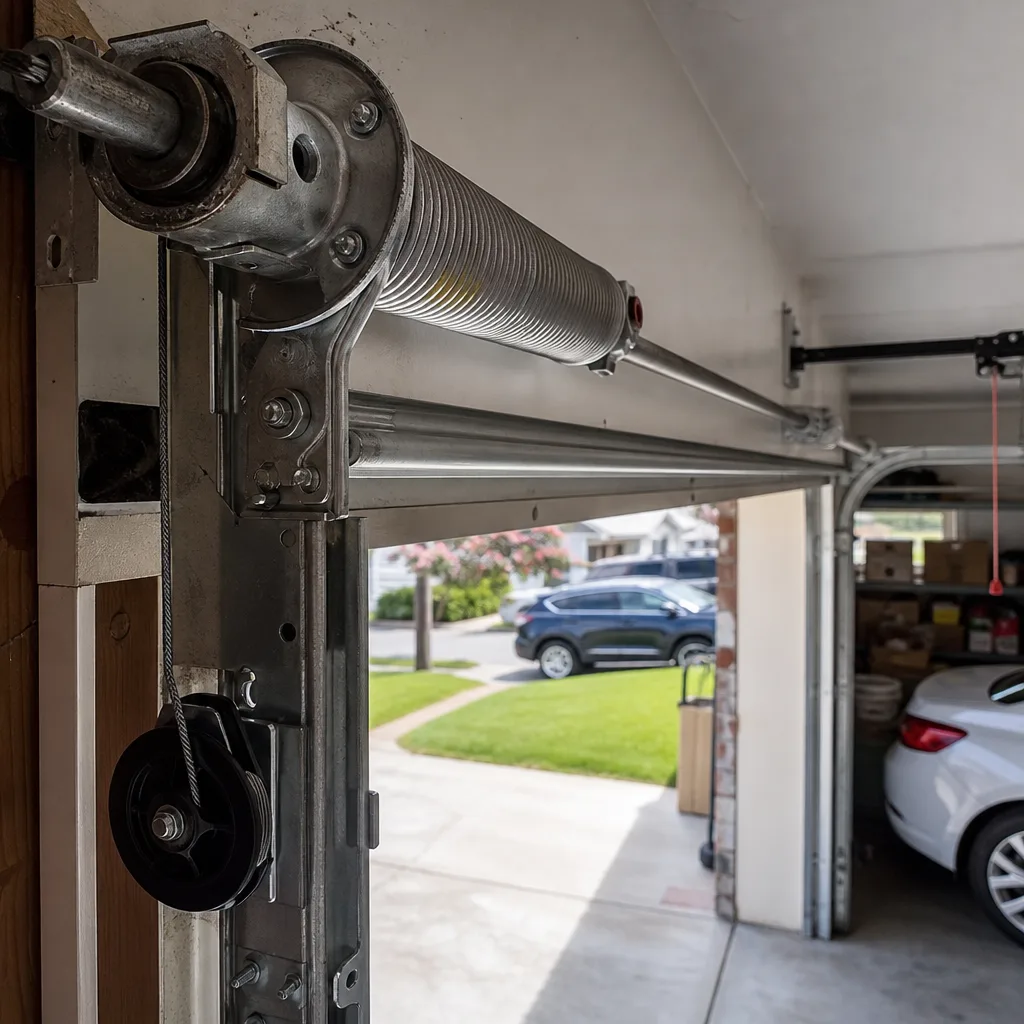
- Look at the spring above the closed door. A torsion spring is the long coiled bar mounted horizontally above the door opening. If it has a visible gap in the coil, a two-inch separation in the middle where the metal broke, the spring is dead. That’s the diagnosis. No further investigation needed.
- Try to lift the door manually using the red emergency release handle hanging from the opener rail. If the door feels enormously heavy, like it weighs 400 pounds, the spring is not doing its job. A healthy spring lets you lift the door with one hand and minimal effort.
- Check for two springs. Most Downey garage doors installed in the last fifteen years use a two-spring system. If one spring broke, the other is not far behind, because they share the same cycle count. Replacing both at once is standard practice and costs about $40 to $80 more than replacing one, but it saves a second service call within months.
Safety note: Torsion springs store enormous amounts of mechanical energy, even when the door is closed all the way. The tension in a wound spring can cause severe injury or death if released improperly. Do not attempt to remove, adjust, or “loosen” a torsion spring yourself. This is the one repair on a garage door that we tell every Downey homeowner to leave alone, no exceptions. The specialized winding bars, the precise tension calculations, and the sequence of operations are not something you pick up from a video. If the spring is broken, call a professional. A spring replacement in Downey runs $180 to $340 installed, including both springs on a two-spring door, and it’s a same-day job for most garage door repair in Downey calls.
Cable Repair: The Repair That Prevents Bigger Repairs
Garage door cables are the thin steel wires that attach to the bottom corners of the door and wrap around drums at the top. They look like afterthoughts, but they carry the full weight of the door whenever the spring is doing its job. When a cable frays, snaps, or slips off its drum, the door’s balance is compromised instantly, and every other component takes on stress it was never designed to handle.
Downey homeowners see cable problems in two specific patterns. The first is rust-driven fraying, which we see more often in doors that face the ocean air, particularly in the southern parts of Downey where morning marine layer lingers longer. Steel cables don’t rust evenly; they develop thin spots where moisture sits, and those thin spots snap under tension. The second pattern is drum slippage, which happens when the door is forced to operate with a weakening spring. The imbalance causes the cable to unwind from the drum and tangle, which then bends the track and chews up the drum.
Here’s the cost-of-delay reality: a frayed cable is a $30 part and a 45-minute repair. A snapped cable that whips loose while the door is moving is a different animal entirely. It can bend the track, break a roller, damage the bottom bracket, and gouge the door panel. That’s no longer a $30 repair. That’s a $200 to $500 repair because multiple components failed. And it happens fast. A cable that shows visible fraying today will snap within weeks, not months. The fix is to replace the cable immediately when you see any broken strands.
One note from the field: cables are under tension even when the door is open, and the tension path runs through brackets that have their own wear life. If you see a gap between the cable and the drum when the door is closed, or if one side of the door hangs lower than the other by even half an inch, the cable has already slipped, and the next cycle could be the one that causes the damage. Do not run the door in that condition. The Garage Door Service Downey home page has more on what to check before calling.
Track and Roller Repair: When the Door Fights Back
A garage door that shudders, squeals, or makes a grinding noise as it moves is almost always a track or roller problem. The two components work together: the tracks are the steel or aluminum rails that run vertically up the wall and horizontally back into the garage, and the rollers are the wheels that ride inside those tracks. When either one is compromised, the door tells you immediately.
Rollers wear out on a predictable cycle in Downey. Steel rollers without bearings, the kind most builders installed in tract homes through the 1990s and early 2000s, last five to seven years before the metal wheels develop flat spots. Nylon rollers with sealed bearings last longer, ten to twelve years, and they’re quieter from day one. The upgrade from steel to nylon costs about $15 to $25 per roller installed and it’s one of the best value repairs in the garage door trade, because it eliminates noise and extends track life simultaneously.
Track problems are usually less obvious. A track can be bent by a car bumper, a falling ladder, or the stress of a door operating with a broken cable. It can also fall out of alignment gradually, especially in older Downey garages where the wood framing has settled and the mounting brackets have loosened. The signs to look for:
- The door hesitates or sticks at the same point in its travel every time
- You can see visible wear marks or scoring on the inside of the track
- The gap between the track and the roller is wider on one side than the other
- The door makes a scraping sound that changes pitch as it moves
Here’s the diagnostic fork in the road: if the rollers are the problem, you’ll hear a rough, rolling sound like a skateboard on gravel, and the repair is simple and inexpensive. If the track is the problem, the door will bind and resist movement, and continuing to operate it will destroy the rollers and potentially pull the track loose from the wall. Either way, the repair is straightforward for a specialist, but a bent track should not be “persuaded” with a hammer. Track alignment is measured, not muscled.
For homeowners who want the full picture of what’s involved in a service call, our Garage Door Repair in Downey page breaks down pricing and process for these kinds of mechanical repairs.
Opener Repair: The Most Neglected System
Garage door openers fail in two distinct ways, and only one of them is usually the opener’s fault. The first kind of failure is mechanical: the motor burns out, the gear wears down, the belt or chain breaks, the rail comes loose. The second kind is circumstantial: the opener is fine, but it’s being asked to move a door that’s fighting back because the spring, cable, or rollers are failing. That second category is why so many homeowners replace openers they didn’t need to replace.
Here’s how to tell the difference before you call anyone. Stand under the opener while the door is moving. If the motor sounds like it’s straining, like it’s laboring to lift the door, the problem is probably the door, not the opener. A healthy opener on a healthy door sounds smooth and consistent, almost effortless. If the motor runs but the door doesn’t move at all, the gear inside the opener head has likely stripped, which is a known failure point on older LiftMaster and Chamberlain units with plastic gears. That’s a genuine opener repair and it runs $150 to $300 in Downey, depending on the model and the age of the unit.
Opener problems we see regularly in Downey:
- The remote works, but the wall button doesn’t (or vice versa): This is almost always a wiring or logic board issue, not a mechanical failure.
- The opener reverses immediately after touching the floor: The travel limits or force settings need adjustment, often because the door has settled or the weatherseal was replaced with a different thickness.
- The opener runs, but only opens the door a foot or two: The door is binding, usually because of a broken cable or a bent track. The opener’s safety circuit is doing its job.
- The opener makes a grinding sound and the door jerks: The gear is stripping. This will fail completely soon, usually within a week or two.
Brand familiarity matters here. We work on LiftMaster, Chamberlain, Genie, and Craftsman openers more than any others in Downey, and each one has its own failure personality. LiftMaster and Chamberlain units share a lot of DNA because they’re made by the same parent company, and the plastic gear failure is their most common end-of-life issue, usually around year eight to ten. Genie openers use a different drive system and tend to hold up longer on the mechanical side, but their logic boards are more sensitive to power surges. Craftsman openers, the ones still running from the 2000s, are workhorses, but replacement parts are getting harder to source. A dedicated Garage Door Opener Repair in Downey specialist recognizes these patterns before the opener is even unplugged.
Weatherseal and Bottom Seal: Downey’s Hidden Wear Item
The bottom seal on a garage door is a strip of rubber or vinyl that runs along the floor edge of the door. It costs $20 to $40 for the part. It degrades faster in Downey than in places like Phoenix or Las Vegas because our coastal-adjacent humidity and temperature swings cause rubber to dry, crack, and lose its flexibility. When the seal fails, the problem is rarely urgent the way a broken spring is urgent, but it’s a repair that quietly pays for itself.
What a dead bottom seal costs you in Downey:
- Dust and debris blow in through the gap along the floor, which is a bigger deal in Downey’s dry, windy months than homeowners expect. Everything in the garage gets coated in fine grit.
- Water intrusion during the rainy season, especially in low-lying areas and homes with sloped driveways where water gathers at the door line.
- Pest access. A gap of half an inch is an open door for rodents and insects, and Downey has both in abundance.
- Energy loss if your garage is attached to your house. The garage acts as a buffer space, and a broken seal undermines that buffer.
Replacing a bottom seal is one of the few garage door repairs that a Downey homeowner can honestly do themselves, though DIY vs Professional Garage Door: The Downey Homeowner’s Decision Guide explains when to call in help. The old seal slides out of its channel, the new one slides in, and the job takes about twenty minutes with a utility knife and a pair of pliers. No special tools, no tension, no danger. If you’re not sure which seal profile your door uses, it’s stamped on the side of the old seal, or you can take a photo and match it at any building supply store. The important thing is to buy the right profile for your specific door, because Amarr and Clopay doors use different channel shapes than Wayne Dalton doors, and the seal that fits one won’t fit the other. That’s one of those details where brand knowledge saves a second trip to the store.
What Fails First on Your Brand: A Field Guide
We’re asked all the time whether we have a favorite garage door brand. The honest answer is that we don’t have a favorite, because we work on all of them, and every brand has its strengths and its known weak spots. What we do have is a mental map of which component fails first on each brand, and sharing that map openly is the kind of thing a specialist can do that a generalist can’t.
Here’s what we see in Downey garages, brand by brand:
- LiftMaster and Chamberlain (openers): The plastic drive gear wears down at the eight-to-ten-year mark. If your opener runs but the door doesn’t move, and you have one of these brands, that’s the likely culprit. The repair is straightforward and well-established.
- Genie (openers): The mechanical side is durable, but the logic board is sensitive to voltage spikes. We see failures after power outages and brownouts in Downey more than any other cause.
- Craftsman (openers): These are aging out. The ones still running from the early 2000s are built like tanks, but the gear-and-sprocket assemblies are obsolete or expensive, and at a certain point replacement makes more sense than repair.
- Clopay and Amarr (doors): Both make excellent doors, but the bottom seal channels vary between models, and seal replacement requires the correct profile. The doors themselves hold up well in Downey’s climate; the seals are the maintenance item.
- Wayne Dalton (doors): The TorqueMaster spring system is unique and behaves differently than a standard torsion spring setup. It’s not worse, but it’s different, and a technician who doesn’t know Wayne Dalton’s system will misdiagnose it. We handle these regularly, but they require brand-specific knowledge.
- Raynor (doors): Solid construction, and the doors tend to outlast their rollers and seals, which is the pattern you want. We see fewer structural failures on Raynor doors than on any other major brand.
The takeaway is not that one brand is better. The takeaway is that a technician who knows your brand before they arrive is working with a head start, and a technician who doesn’t is learning on your clock. If you have a door from a specific manufacturer and you want brand-informed advice on whether to repair or replace, the team that handles garage door installation in Downey is the same team that repairs every brand listed here, which matters when the answer is not obvious.
Common Mistakes to Avoid
- Running the door after a spring breaks. When one spring snaps, the remaining spring is doing double duty, and continuing to cycle the door on the opener will destroy it within days. A door with a broken spring is a door that stays down until the spring is replaced.
- Assuming the opener is broken when the door won’t move. We covered this above, but it’s worth repeating because it’s the single most common misdiagnosis in Downey garages. A broken spring, a snapped cable, or a jammed roller will all present as “the opener won’t work.” Replacing the opener won’t fix any of those.
- Buying parts online before the diagnosis is confirmed. We’ve seen homeowners order a $200 logic board on a hunch, only to discover the actual problem was a $40 gear. If you’re not certain what’s broken, a diagnostic service call is cheaper than a wrong part.
- Ignoring a frayed cable because “it’s still working.” The cable is not still working; it’s failing on a schedule you can’t see. The repair cost triples or more when it lets go.
- Lubricating the tracks. This one comes up constantly. Garage door tracks are not meant to be lubricated. Grease on the tracks attracts dirt and creates a grinding paste that accelerates roller wear. The parts that need lubrication are the rollers’ bearings, the hinges, and the spring, using a specific garage door lubricant, not WD-40.
- Waiting to replace a bottom seal until “it looks bad.” A bottom seal can look intact while being completely ineffective. If you can see daylight under the door when it’s closed, the seal is done, and every day it’s not replaced is a day of dust, water, or pest intrusion.
When to Call a Professional
If you have a broken spring, a snapped or frayed cable, a bent track, or any problem involving the opener’s mechanical internals, call a professional. These components are under tension or connected to stored energy, and the cost of a proper repair is a fraction of the cost of an injury or a cascading failure. The same goes for any repair where the door is off-balance or won’t stay in position when lifted manually. In Downey, the fastest path to a working door is a specialist who sees your exact brand and system every week, not occasionally.
Garage Door Service Downey offers free estimates in Downey, and our work is done by technicians who work exclusively on garage doors, covering the brands listed throughout this guide. Call (844) 734-1196 and describe what you’re seeing. Even if you’re not sure what’s broken, the description of the symptom is usually enough to tell us which parts the truck needs to carry on the drive over.
Frequently Asked Questions
Most Downey garage door repairs cost between $125 and $400, depending on the failed component. Spring replacement typically runs $180 to $340 for both springs on a two-spring door, cable replacement runs $150 to $250, and opener gear replacement runs $150 to $300. Our prices are always quoted and agreed before any work starts, and the estimate includes the parts, the labor, and any adjustments needed to the door’s travel, force, and balance settings.
Yes. Most repairs, including spring and cable replacement, are completed in a single same-day visit. If you call in the morning, we can usually have a technician in your Downey garage by early afternoon, and the repair itself often takes under two hours for the most common failures.
No. We quote the repair price before we begin, and that price covers the parts and labor for the repair we’re performing. If we discover an additional issue while working, we’ll show you what we found, explain what it means, and give you a separate price for that work before we do anything. You’ll never see a larger invoice than the number you agreed to without signing off on it first.
In most cases, yes. We stock parts for LiftMaster, Chamberlain, Genie, Craftsman, Amarr, Clopay, Wayne Dalton, and Raynor systems on our service vehicles, which is one of the advantages of working with a specialist. If your door is an older or less common model, we’ll let you know before we arrive so there are no surprises about timing. Call (844) 734-1196 to confirm what we have on the truck for your specific system.
Anything involving torsion springs. The tension stored in a wound spring is enough to cause catastrophic injury if it’s released improperly, and the tools and sequence required to do the job safely are not things most homeowners have on hand. If your spring is broken, the safest thing you can do is leave the door closed, disconnect the opener, and call a professional. The cost of a spring replacement is a rounding error compared to the risk of doing it wrong.
Disconnect the opener using the red emergency release handle, then try to lift the door manually. If the door is too heavy to lift with one hand, the spring has failed and the opener is not the problem. If the door opens and closes smoothly by hand but the opener won’t move it, the problem is in the opener’s motor, gear, or logic board. This thirty-second test will save you from paying for an opener replacement you don’t need.
A quality steel door from a major manufacturer, properly maintained in Downey’s climate, lasts twenty to thirty years. The hardware attached to it lasts less: springs seven to ten years, cables five to seven years, rollers five to twelve years depending on material, and bottom seals three to five years. The door itself usually outlives everything that moves it, which is why replacement is often a cosmetic or energy-efficiency decision rather than a functional one.
The Bottom Line
Every garage door problem in Downey traces back to one of six systems, and knowing which one is involved turns a confusing service call into a straightforward transaction. Confirm the failure, understand the cost, and get the repair done before the damage cascades into a bigger bill. Some repairs are honest DIY jobs; some are not, and knowing the difference is the whole point of this guide. For more guides & resources, visit our blog. If you have a broken spring, a frayed cable, a noisy door, or an opener that’s stopped cooperating, a specialist who works only on garage doors is the fastest way back to a working garage. The team here is already familiar with your system before we arrive, because that’s the entire job, and it shows in how quickly the work gets done right.
Written by the team at Garage Door Service Downey, serving Downey since 2016.
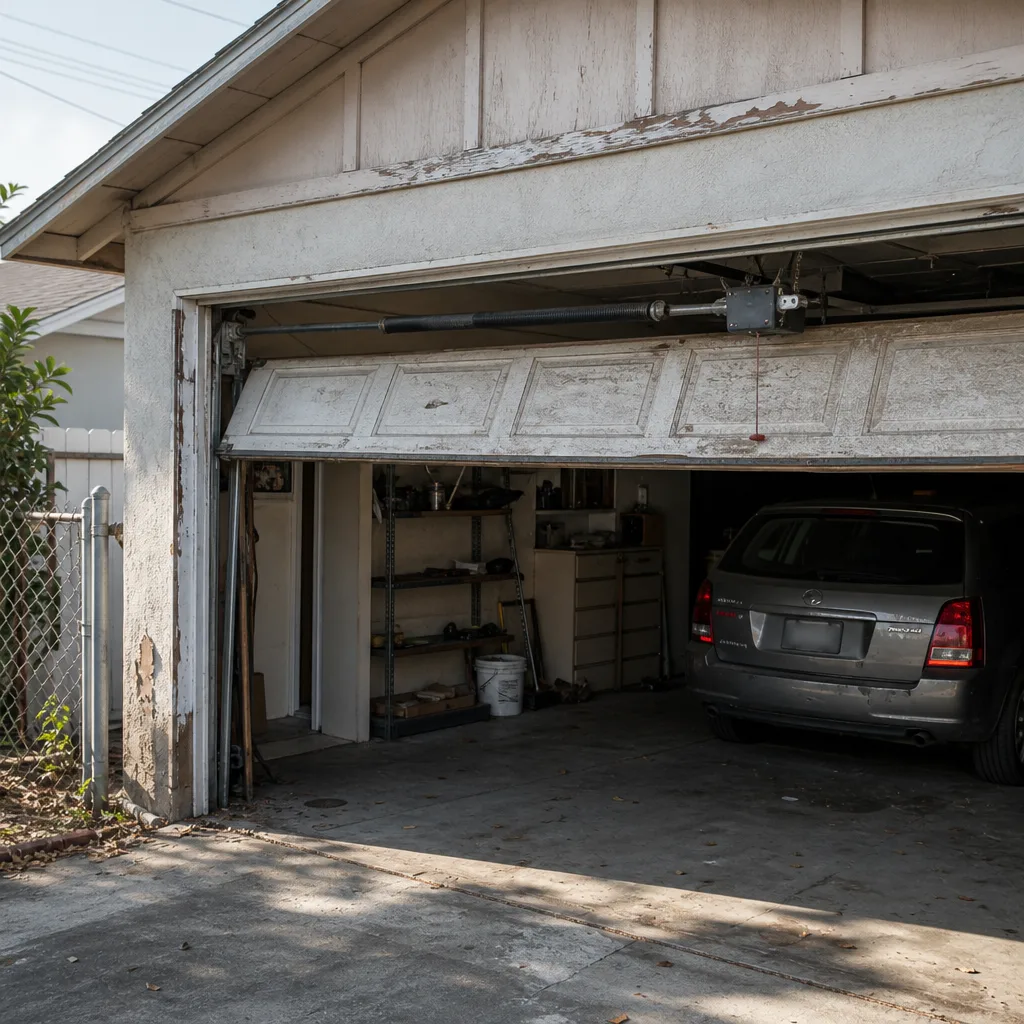
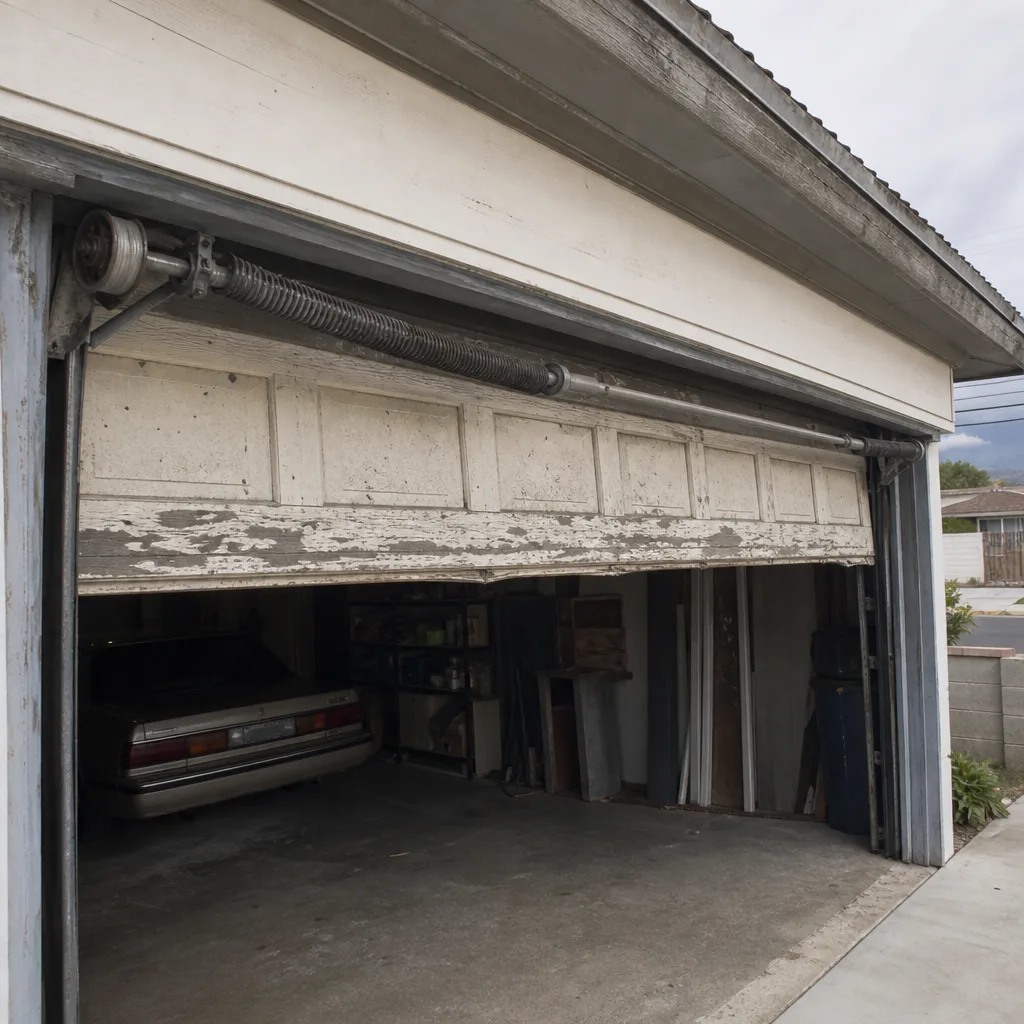
See the difference
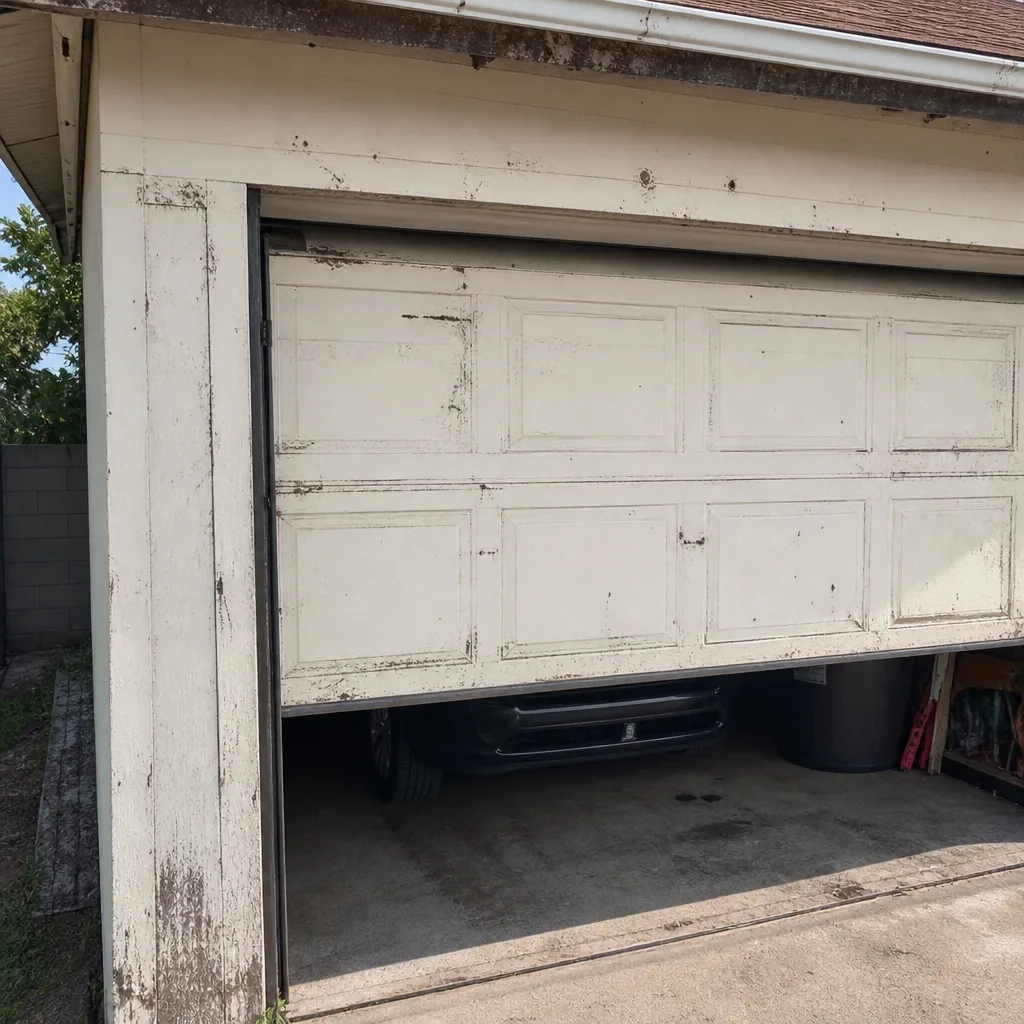 Before
 After
 Before
 After
 Before
 After